Waterproofing & Thermal Insulation in Makkah — Engineered Protection for Roofs, Tanks & Buildings
Bashaer Al Khair provides tailored waterproofing and thermal insulation solutions engineered for Makkah’s rocky topography and extreme solar climate—covering roofs, spray foam, bituminous membranes, concrete water tanks, wet zones, and pools.
Environmental & Building Envelope Factors in Makkah
Why Properties in Makkah Require Tailored Waterproofing & Thermal Specifications
Makkah experiences intense thermal radiation amplified by surrounding rocky mountain basins, combined with seasonal torrential downpours that rapidly load flat roofs and channel runoff along rock fissures toward foundations and underground cisterns. Furthermore, multi-story residential and hospitality buildings in Makkah feature dense rooftop mechanical installations creating critical penetration zones.
Our engineering approach in Makkah prioritizes two pillars: reducing conductive roof heat transfer in alignment with Saudi Building Code (SBC 601 / 602) principles using UV-protected thermal systems, and securing rock-excavated concrete water tanks and multi-story wet areas against structural joint leakage.
01
Extreme Solar Radiation & Thermal Retention in Rocky Basins
Building roofs in Makkah endure extreme surface temperatures that drive continuous thermal expansion and contraction across concrete slabs and expansion joints, requiring high-elasticity waterproofing and thermal insulation.
02
Rock-Excavated Underground Water Tanks & Retaining Walls
Rock excavation in districts like Al-Awali, Al-Shara’i, and Batha Quraish creates rigid stress along concrete cold joints in underground tanks and channels rainwater runoff through rock fissures against foundation walls.
03
High-Occupancy Loads in Multi-Story Residential & Hospitality Buildings
Dense clusters of bathrooms, kitchens, and overhead tanks on Makkah multi-story buildings require meticulous pipe-sleeve, floor-drain, and tank-plinth waterproofing.
Roof Heat Transfer Physics (SBC 601 / 602)
Uninsulated vs. Thermally Insulated Roof Envelope in Makkah
Reducing Thermal Transmittance (U-Value)
Without Thermal InsulationHigh Conductive Heat Gain
Bare Concrete Absorbs, Stores & Radiates Heat Indoors
• Direct solar radiation heats the high-conductivity concrete slab, driving heat straight into top-floor rooms.
• Thermal mass keeps radiating stored heat downward well into the night.
• Continuous HVAC compressor strain and severe thermal expansion stress on the slab.
With Engineered Thermal BarrierHigh Thermal Resistance (R-Value)
Continuous Insulation Blocks Heat Flow & Protects the Slab
• Low-conductivity insulation (XPS / PIR / Closed-Cell SPF) intercepts solar heat before it reaches the structural slab.
• The structural concrete slab remains thermally stable near indoor conditioned temperatures.
• Aligns with Saudi Building Code (SBC 601 / 602) envelope efficiency principles and stabilizes indoor comfort.
Illustrative engineering diagram only — actual layer sequence and specification are determined following on-site substrate inspection per manufacturer TDS.
Specialized Waterproofing & Insulation Services in Makkah
Select Your Required Waterproofing or Thermal Service in Makkah
Roof Waterproofing Makkah
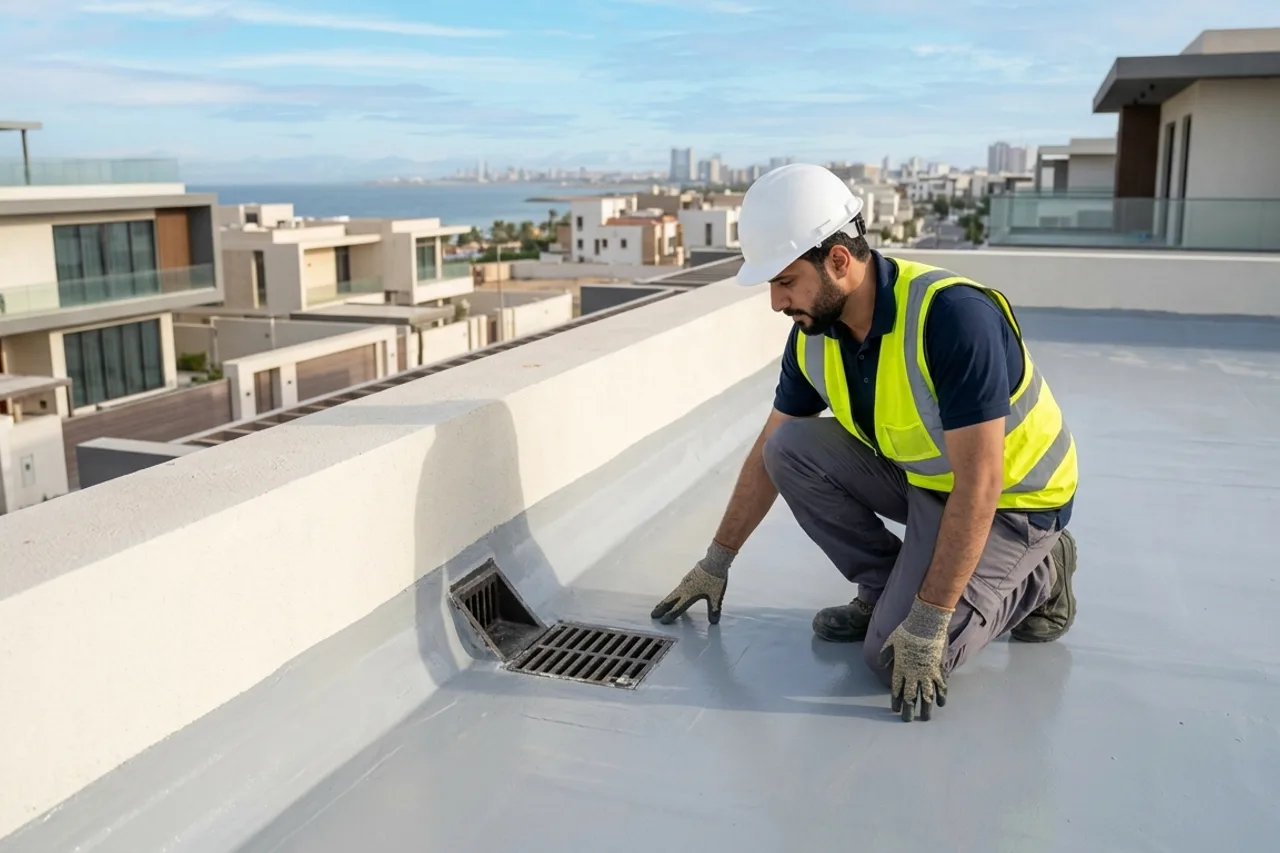
Roof Waterproofing in Makkah — Securing Villa & Building Roofs Against Rainwater & Thermal Stress
In Makkah, heat retention within rocky mountain basins subjects concrete roofs to extreme surface temperatures followed by heavy seasonal downpours, placing severe thermal stress on membranes and joints.
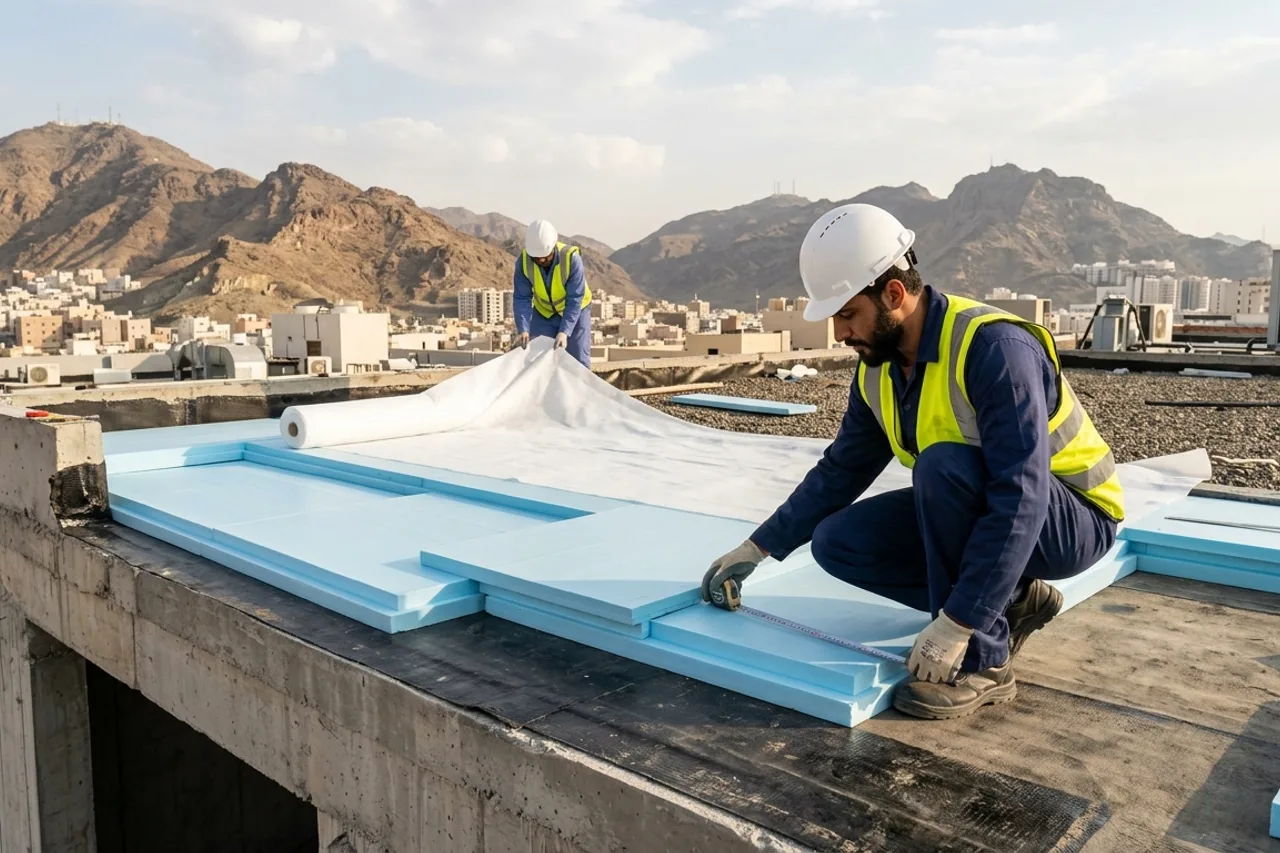
Thermal Roof Insulation in Makkah — High-Resistance Envelope Protection Against Extreme Heat
Makkah experiences extreme summer temperatures intensified by solar radiation reflected off surrounding rocky mountains, making the roof slab the primary source of heat gain in villas, apartments, and hotels.
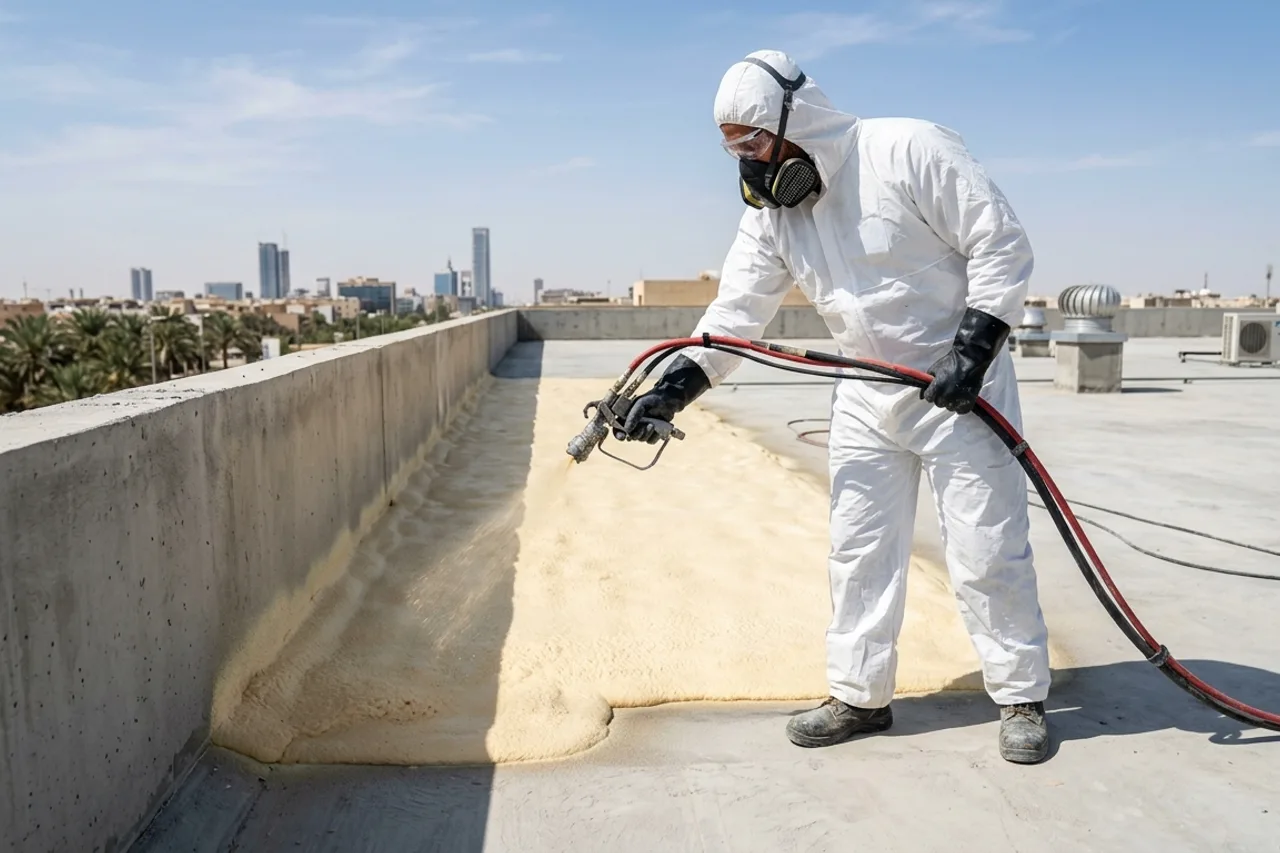
In Makkah, closed-cell spray polyurethane foam provides a practical solution for exposed, pipe-congested concrete roofs—eliminating thermal bridges under extreme summer heat and sealing against seasonal downpours.
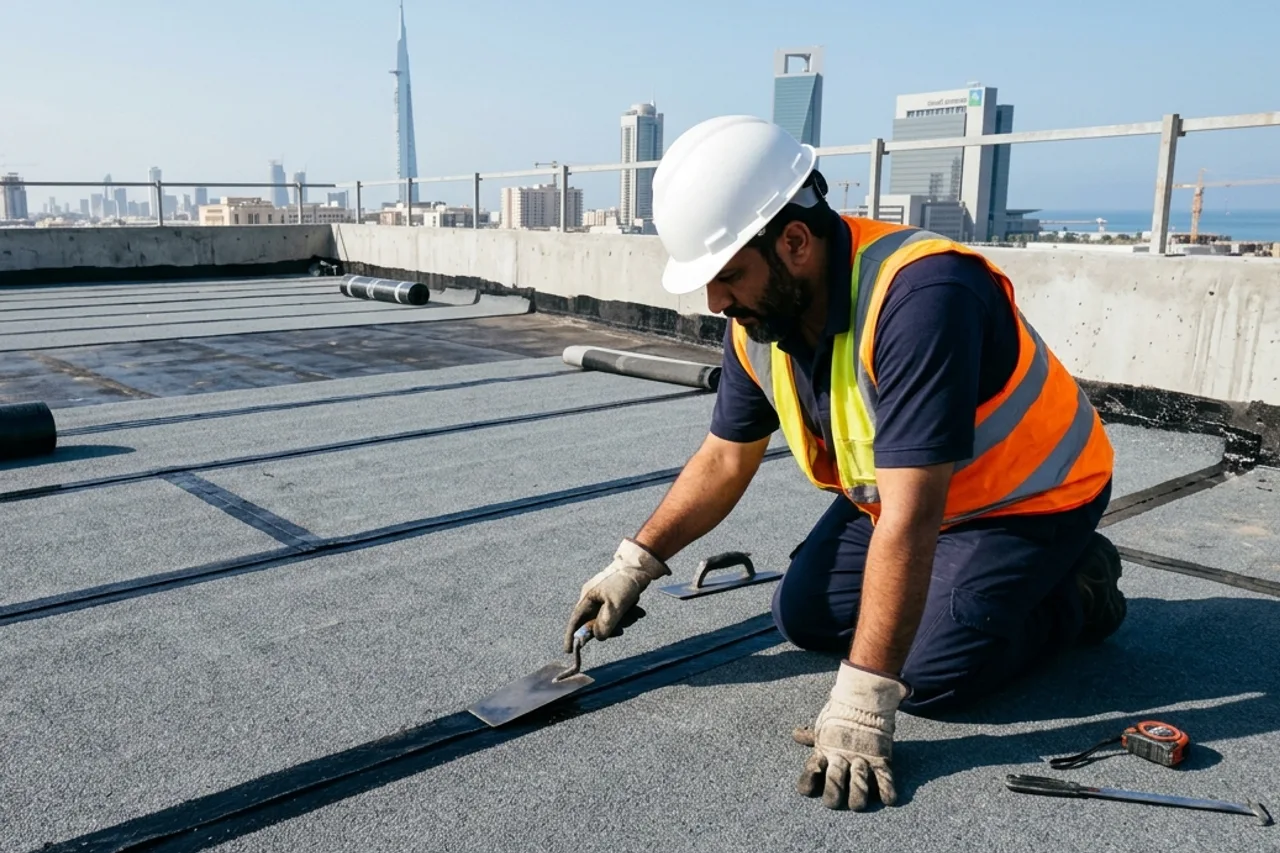
Bituminous Membrane Waterproofing in Makkah — Heavy-Duty Sheet Membranes for Roofs & Substructures
In Makkah, polyester-reinforced bituminous rolls are the trusted choice for new multi-story building and villa roofs receiving inverted thermal assemblies and tiles, as well as retaining walls.
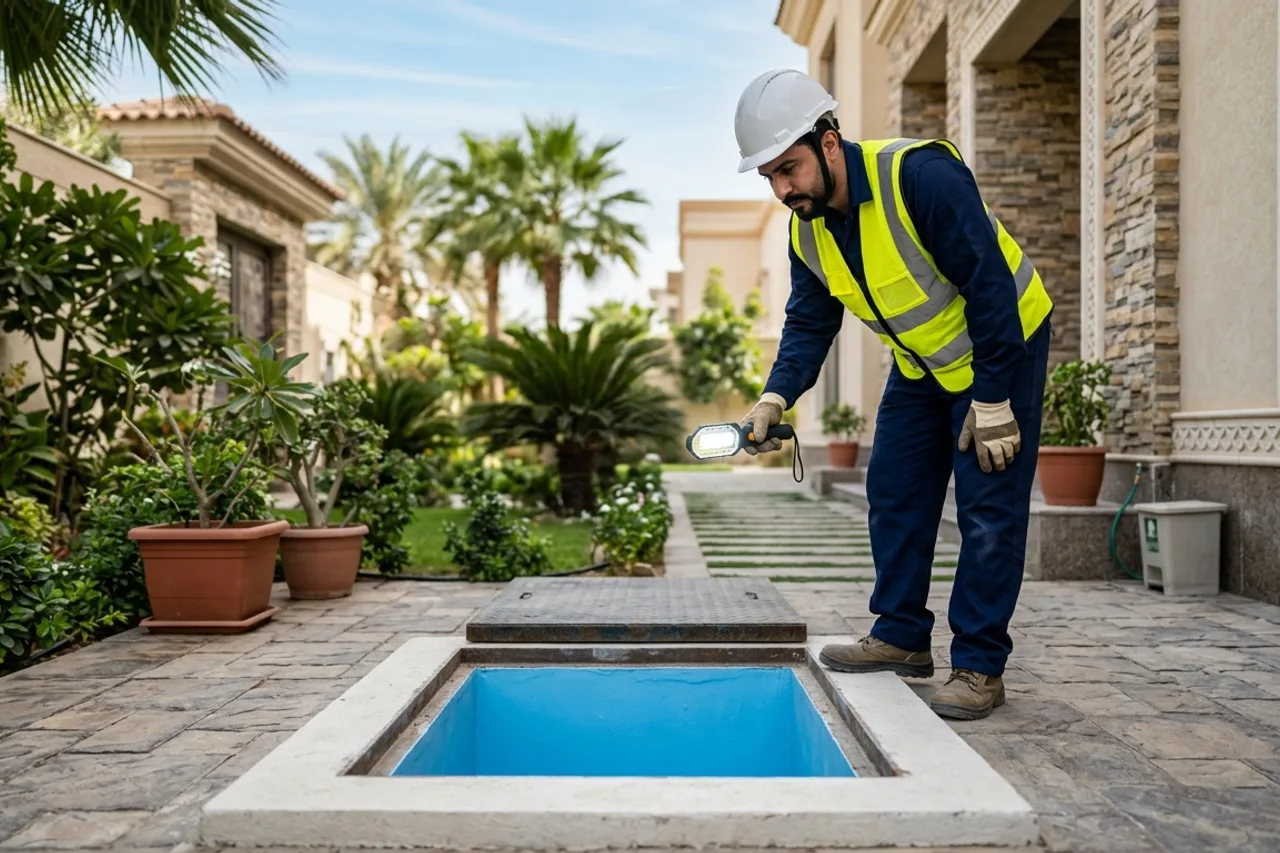
Water Tank Waterproofing in Makkah — Securing Underground & Overhead Concrete Water Tanks
In Makkah, most underground water tanks are excavated into hard rock formations; differential settlement around the neck collar, cold-joint stress, and thermal movement create cracks that silently drain stored water into rock fissures.
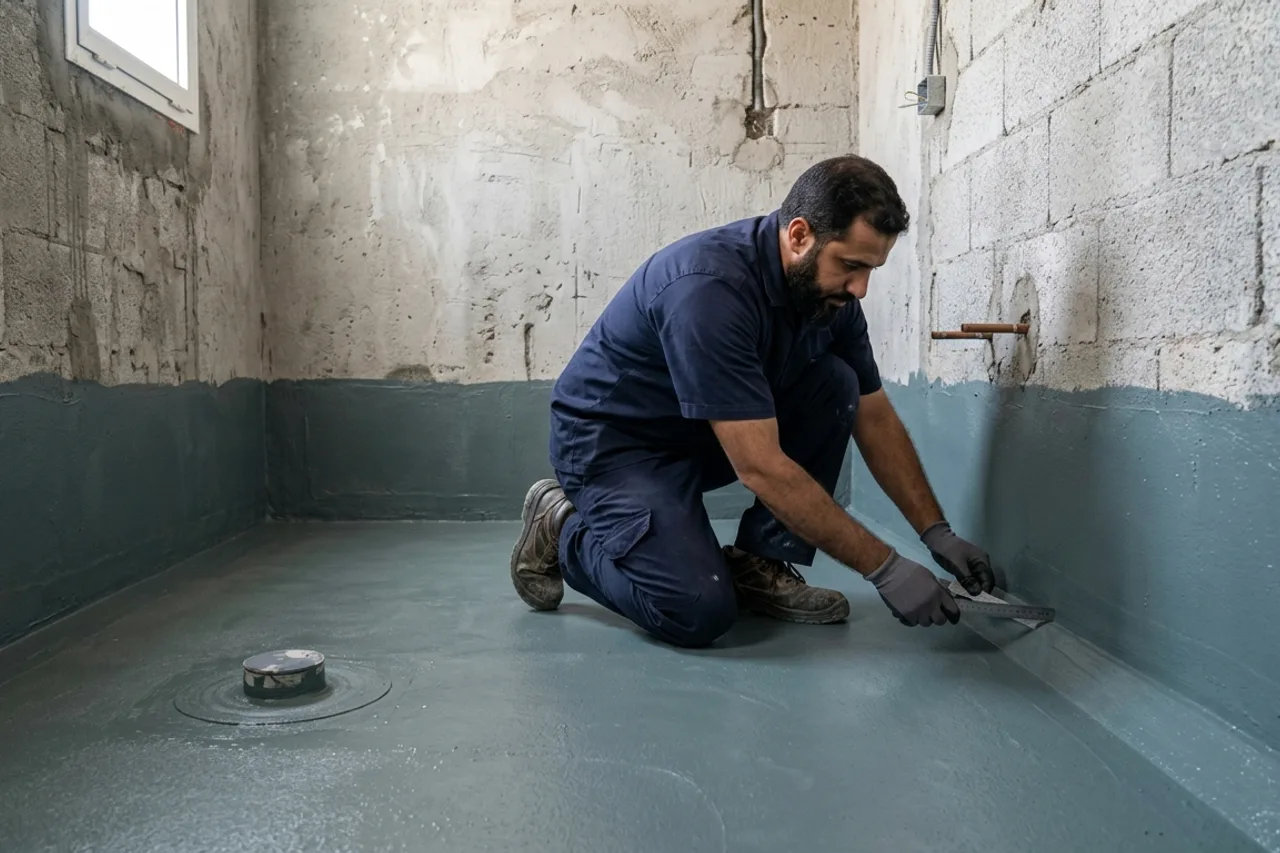
In Makkah, multi-story residential and hospitality buildings contain vertically stacked bathrooms and kitchens under heavy occupancy; a single waterproofing defect on an upper floor can damage multiple floors below.
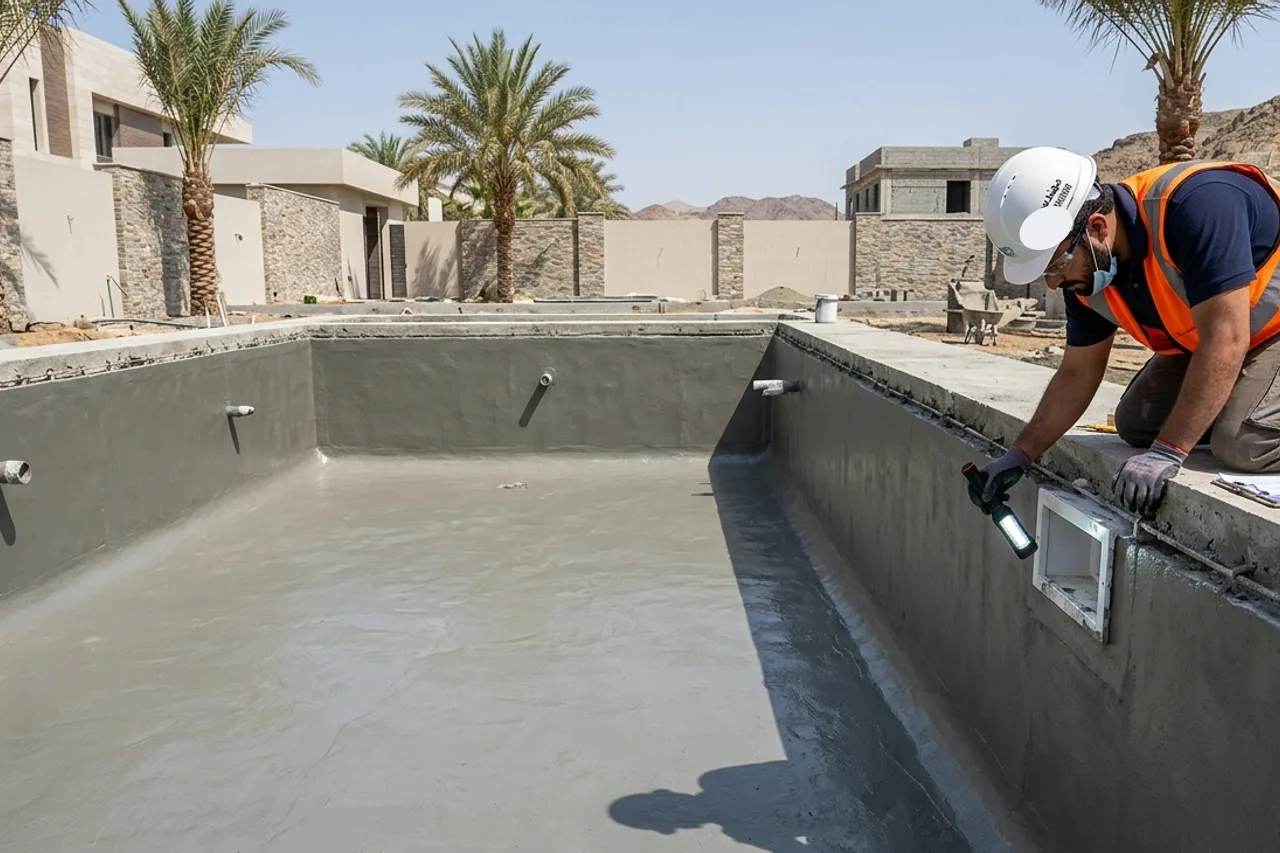
Swimming Pool Waterproofing in Makkah — Concrete Pool Shell Protection for Villas & Resorts
Makkah features numerous private villas, chalets, and resorts in Al-Awali, Al-Shara’i, Al-Hussainiyah, Al-Maghmas, and Al-Amouriyah, where pools face intense solar heat and rock-cut excavation transitions.
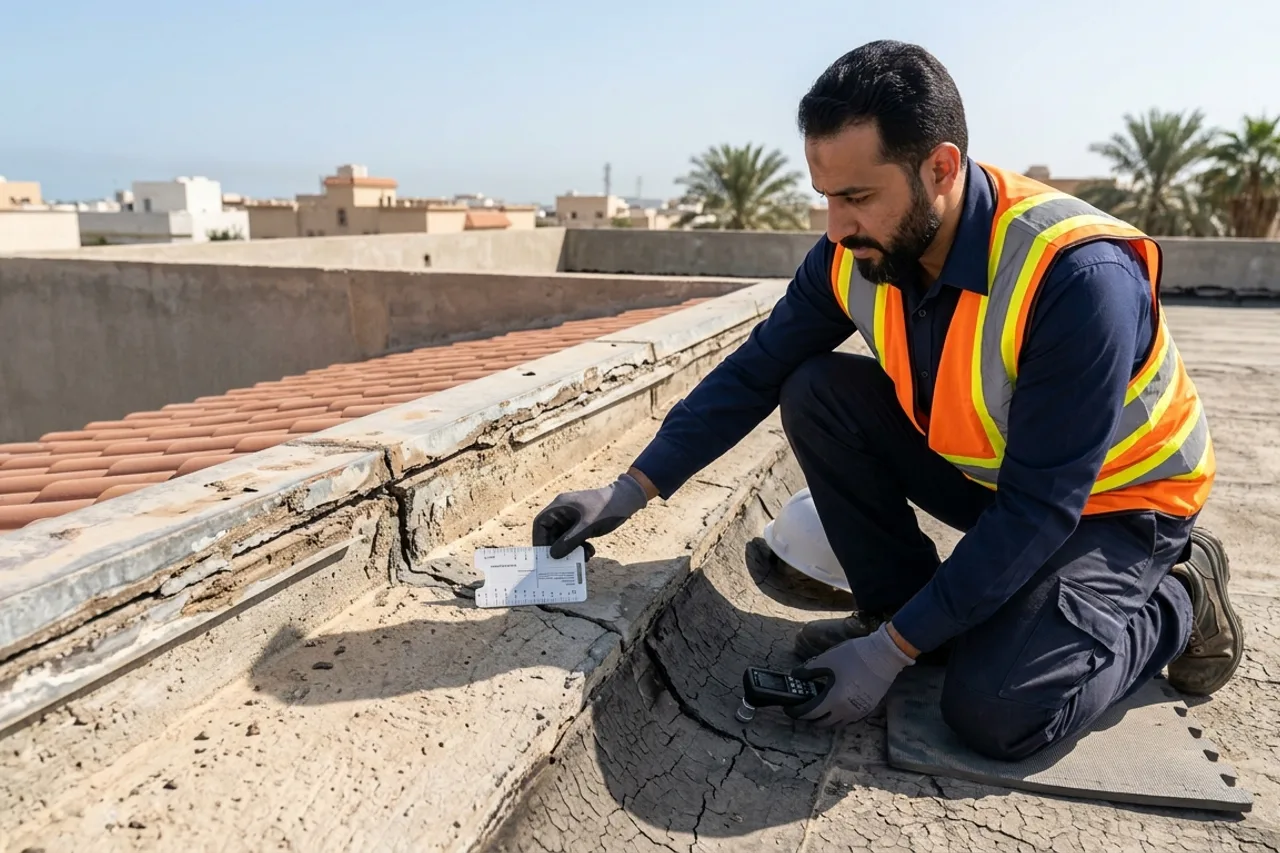
Waterproofing Repair & Restoration in Makkah — Maintaining & Renewing Existing Insulation Systems
In Makkah, extreme summer heat dries and cracks conventional joint sealants and accelerates UV topcoat chalking on exposed roofs if not periodically maintained.
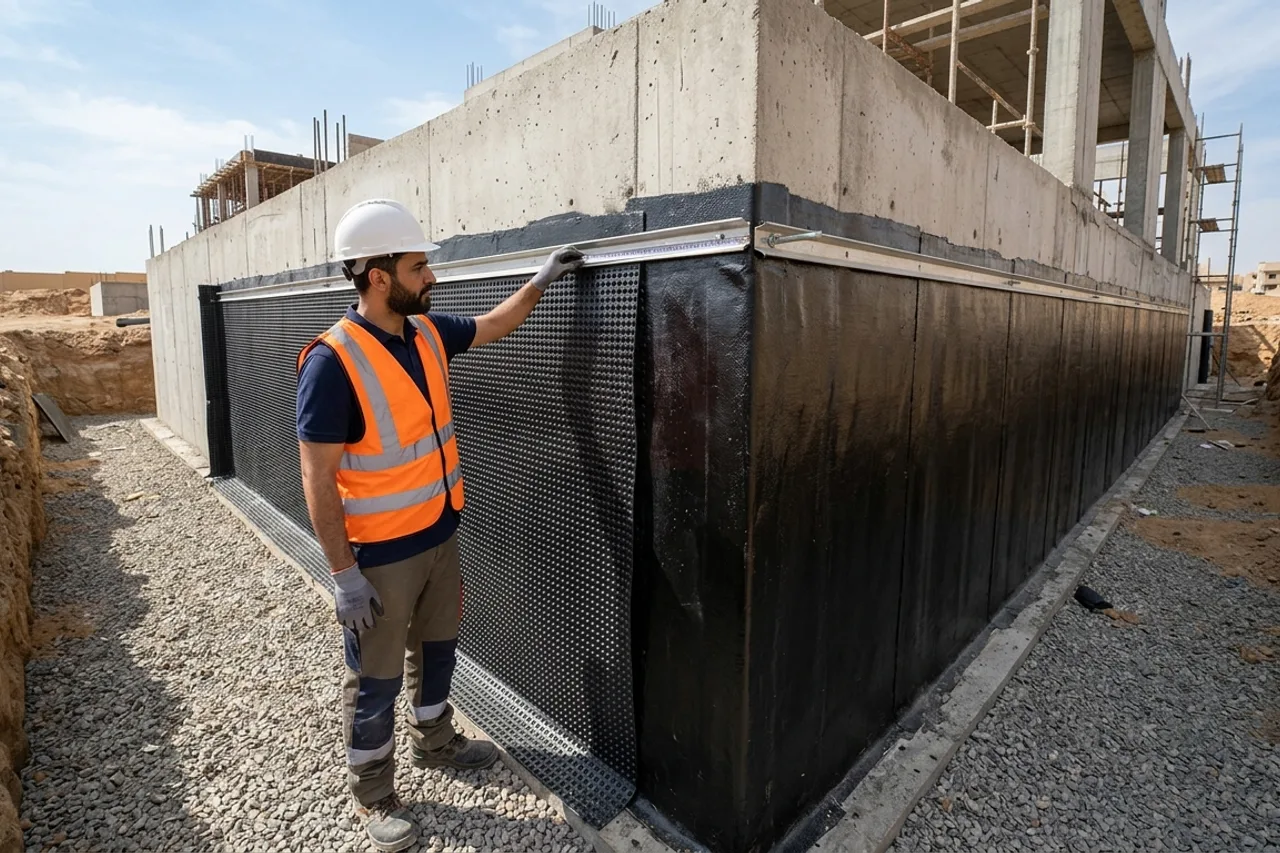
Basement & Foundation Waterproofing in Makkah — Securing Retaining Walls, Grade Beams & Basements
In Makkah, many residential buildings and villas are constructed into rock-cut hillside plots requiring deep concrete retaining walls and basements. Seasonal rainwater travels through rock fissures, building hydrostatic pressure behind retaining walls and footings.
Specialized Water Tank & Pool Coatings (Epoxy & Hydraulic Mortars)
Primary Use Cases & Compatible Substrates:
Internal lining of reinforced concrete water tanks (using certified potable-water systems) and swimming pool structural shells.
Substrates: Mechanically profiled reinforced concrete with all honeycombing, tie-rod holes, and active negative leaks sealed first.
Water Exposure Rating:
Specifically engineered for 24/7 continuous water immersion and resistance to chlorides and treatment chemicals.
Solar & UV Resistance:
Internal tank epoxies are designed for enclosed tanks (low UV stability); outdoor pools use flexible cementitious membranes under tiles.
Foot Traffic Suitability:
High abrasion resistance during periodic tank cleaning once the full manufacturer curing schedule is completed.
Protective Layer Needed:
Potable tank epoxy serves as the final smooth lining; pool cementitious waterproofing is covered by mosaic tiles and chemical-resistant grout.
Technical Limitations & Precautions:
Never assume generic industrial epoxy is potable-water safe — requires verified potable-water compliance documentation and full cure time.
Ventilating the tank, grinding concrete laitance, routing and plugging cracks with hydraulic mortar, forming corner fillets, and drying.View Service Page
Important Engineering Note: This guide provides an engineering comparison of material families; final system specification, primer pairing, and layer build-up are determined after an on-site substrate and moisture assessment per manufacturer TDS.
Field Service Coverage Across Makkah Districts
Serving All Residential & Commercial Districts Across Makkah
South & East Makkah: Al-Awali, Al-Shara’i, Batha Quraish, Al-Hada, Al-Kakiyah, Al-Shawqiyah, Wali Al-Ahd, Al-Hussainiyah.
West & North Makkah: Al-Zaydi, Al-Hamra, Al-Nawariyah, Al-Umrah, Al-Buhayrat, Al-Fayha, Al-Rusaifah, Al-Khalidiyah.
Central Makkah & Commercial Corridors: Al-Aziziyah, Al-Naseem, Al-Nuzha, Al-Zahir, Al-Sitteen, and multi-story residential/hospitality properties.
Verified Geotechnical & District Coverage Intelligence — 42 Core Districts
Engineering Coverage, Soil & Building Matrix in Makkah
Harsh basaltic and granitic rocky mountain topography intersected by seasonal flash-flood wadi channels, combined with extreme summer temperatures (exceeding 45–48°C) and heavy operational stress on underground/elevated water tanks and high-head booster pumps in residential and hospitality buildings.
Field Dispatch Note: Mobile diagnostic and waterproofing engineering crews operate daily across all verified Jeddah and Makkah districts listed above via scheduled appointments.
Build Your Project Scope & Request an Itemized Quote in Makkah
We never quote misleading flat rates without evaluating your substrate. Select your project parameters below to generate your technical scope summary and schedule an engineer visit.
Frequently Asked Questions in Makkah
Engineering Answers for Property Owners in Makkah
What is the best system to insulate villa and building roofs against both solar heat and rain in Makkah?
Selection depends on roof structure and usage: on non-tiled roofs or decks with complex piping, closed-cell spray polyurethane foam (SPF) with a UV-resistant elastomeric topcoat provides seamless combined thermal and waterproofing protection. On trafficked or tiled roofs, a multi-layer inverted roof assembly (bituminous/liquid waterproofing + XPS thermal boards + geotextile + tiles/ballast) is preferred.
Does waterproofing an underground tank in Makkah replace checking the float valve and tank neck?
No; many water-loss cases in Makkah tanks occur at the tank neck collar, float valve, or inlet supply pipe. Our tank waterproofing assessment inspects the neck joint and upper penetrations alongside internal concrete wall and slab remediation.
How is the per-square-meter waterproofing cost determined in Makkah?
There is no single arbitrary flat rate for all surfaces; cost is determined by total area, substrate condition, whether old failed layers require removal, selected material system, and the extent of crack, coving, and expansion-joint preparation.
How are rooftop AC sleeves and overhead tank bases waterproofed on Makkah buildings?
Pipe penetrations and overhead tank plinths on Makkah buildings are prime leak points; we form non-shrink cementitious fillets around every sleeve, reinforce them with geotextile fabric and polyurethane sealant, and encapsulate them seamlessly into the primary roof membrane.
Does spray foam insulation in Makkah withstand extreme summer temperatures?
Yes, provided high-density closed-cell polyurethane foam (40–45 kg/m³) is applied and immediately protected with a UV-reflective elastomeric acrylic or aliphatic polyurethane topcoat at the manufacturer-specified dry film thickness.

 Roof Waterproofing Makkah