Bashaer Al Khair — Water Leak Detection & Waterproofing
Active Service Coverage:Jeddah & Makkahالعربية
Bashaer Al Khair Waterproofing & Water Leak Detection
Bashaer Al KhairWaterproofing & Leak Detection
Regional Waterproofing & Thermal Insulation Hub — Jeddah

Waterproofing & Thermal Insulation in Jeddah — Engineered for Coastal Humidity, Salinity & Solar Heat

Bashaer Al Khair delivers specialized roof waterproofing, thermal insulation, spray foam, bituminous membranes, water tank linings, and pool waterproofing across Jeddah—grounded in thorough substrate diagnostics.

Waterproofing & Thermal Insulation in Jeddah — Engineered for Coastal Humidity, Salinity & Solar Heat
Full field engineering coverage across Jeddah
SBC 601 / 602 / 303Illustrative
Environmental & Building Envelope Factors in Jeddah

Why Properties in Jeddah Require Tailored Waterproofing & Thermal Specifications

Jeddah combines intense year-round solar heat, high coastal relative humidity laden with airborne chlorides, and shallow saline groundwater tables across coastal and northern districts. Selecting a waterproofing or insulation system in Jeddah requires matching material physics to these exact environmental stresses.
In Jeddah underground water tanks and basements, negative hydrostatic pressure from coastal groundwater requires negative-side cementitious waterproofing before applying internal linings. On flat villa and apartment roofs, seasonal heavy rainfall and extreme summer heat demand integrated drainage detailing and UV-protected thermal insulation.
01

Coastal Groundwater & Negative Hydrostatic Pressure on Tanks/Foundations

In districts like North/South Obhur, Al-Shati, Al-Murjan, and Al-Hamra, shallow water tables exert inward hydrostatic pressure on underground tanks and foundations (SBC 303 context).

02

Humid-Hot Thermal Loads on Villa & Commercial Roofs (SBC 601 / 602)

Mitigating conductive heat gain through concrete and metal roofs in Jeddah requires continuous thermal insulation (XPS/PIR boards or UV-coated closed-cell SPF) to eliminate thermal bridging.

03

Grout & Expansion Joint Degradation on Tiled Roofs & Wet Zones

Salinity and daily thermal expansion crack tile grout and saturate underlying sand-screed beds, making moisture testing mandatory before over-tile waterproofing.

Roof Waterproofing Assembly Cross-Section (SVG)

Engineered Roof Waterproofing Layers & Critical Details in Jeddah

Slope Screed + Membrane + Parapet Upstand + Protection
Parapet Wall1. Reinforced Concrete Roof Slab (Structural Deck)2. Sloped Cementitious Screed + Penetrating Primer Toward Drain3. Continuous Waterproofing Membrane (Bitumen Roll / Liquid PU / SPF)Mechanical Termination Bar + PU Sealant + 45° Cant Strip4. Geotextile Separation Layer + Thermal Boards (XPS) or UV Topcoat5. Final Wearing / Protection Course (Roof Tiles / Gravel / Solar Reflective Coat)Rainwater Drain (Recessed Flashing Collar)

Illustrative engineering diagram only — actual layer sequence and specification are determined following on-site substrate inspection per manufacturer TDS.

Specialized Waterproofing & Insulation Services in Jeddah

Select Your Required Waterproofing or Thermal Service in Jeddah

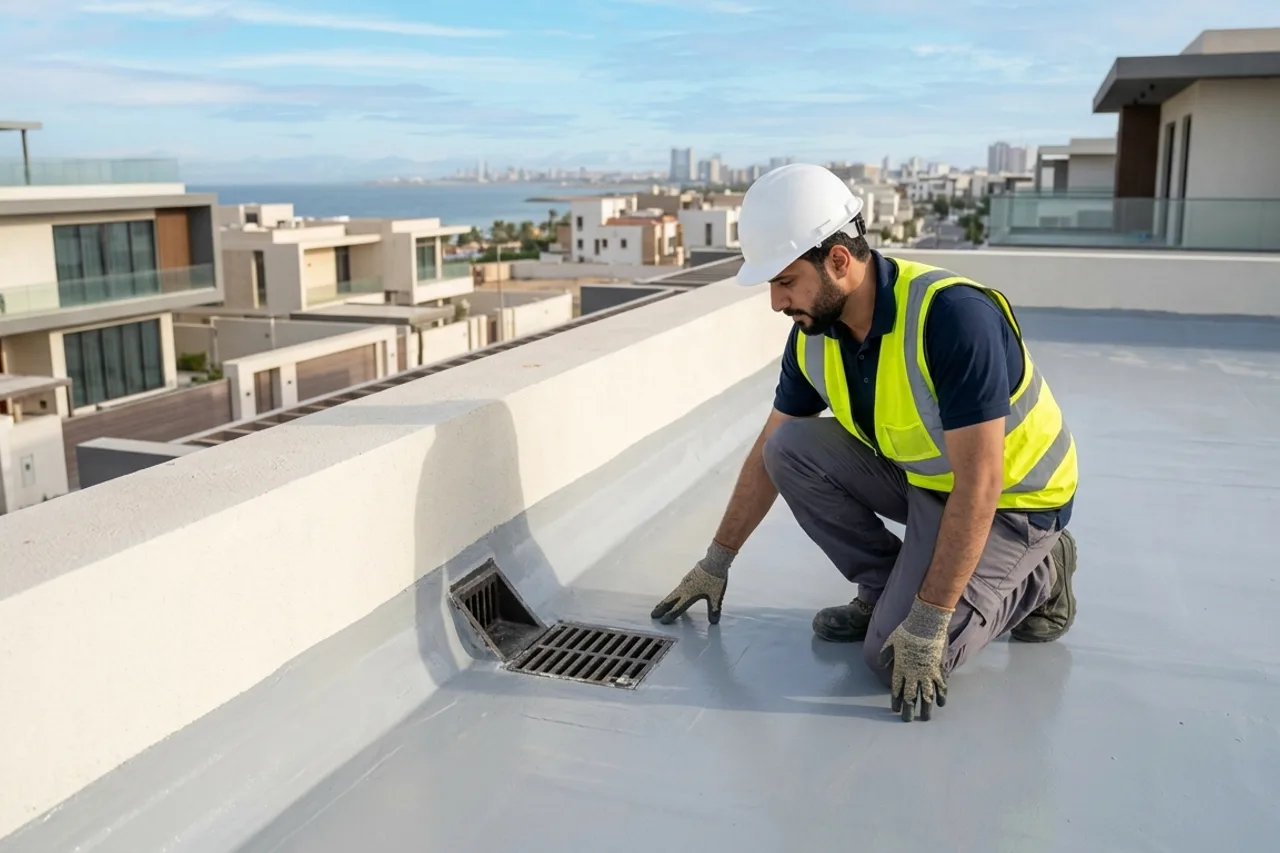
Waterproofing engineer inspecting a Saudi villa concrete flat roof, rainwater scupper drain, and parapet coving in Jeddah and MakkahRoof Waterproofing Jeddah

Roof Waterproofing in Jeddah — Engineered Solutions for Concrete, Tiled & Exposed Roofs

In Jeddah, villa and apartment roofs face salt-laden coastal humidity, intense solar UV, and sudden heavy rainstorms that overwhelm undersized drains—rapidly degrading weak coatings and tile grout.

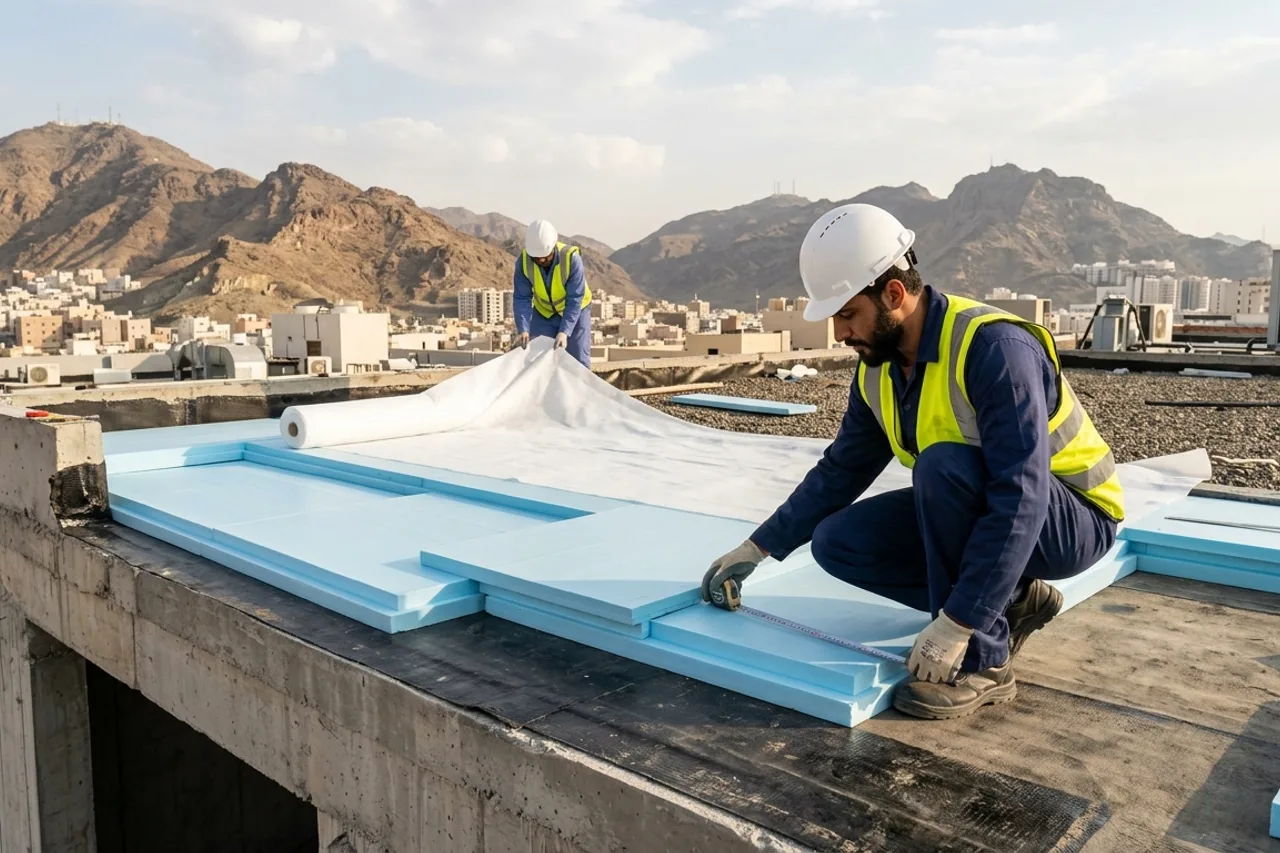
Installation of rigid thermal insulation boards and geotextile separation felt on a building roof in Makkah and JeddahThermal Roof Insulation Jeddah

Thermal Roof Insulation in Jeddah — Engineered Systems to Reduce Solar Heat Transfer

Jeddah lies in a hot-humid climatic zone where residential and commercial buildings rely on air conditioning most of the year. Proper roof thermal insulation reduces conductive heat gain through the roof slab and stabilizes indoor temperatures.

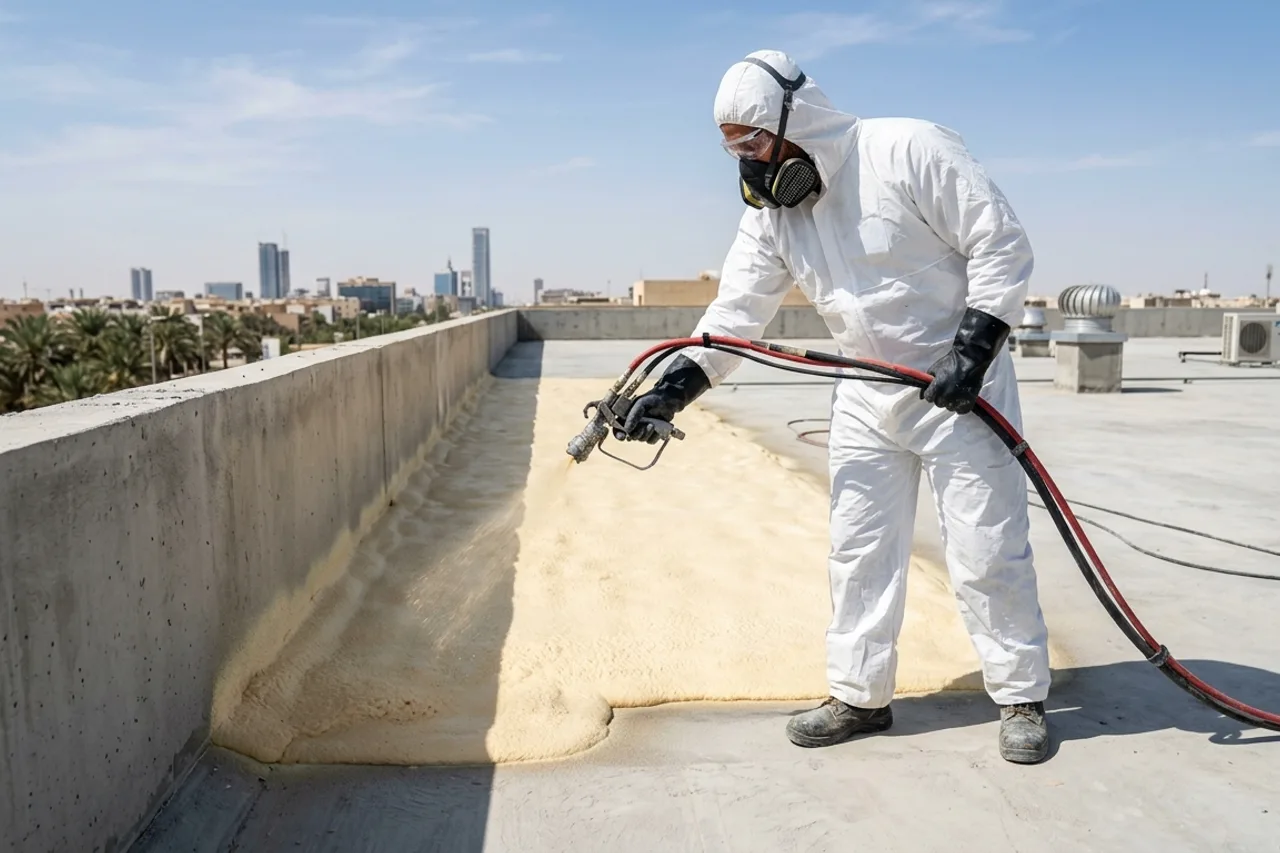
Professional insulation technician wearing full PPE applying closed-cell spray polyurethane foam onto a concrete roof slab in Jeddah and MakkahSpray Foam Insulation Jeddah

Spray Foam Insulation in Jeddah — Seamless Closed-Cell Polyurethane Systems for Roofs

Villa and warehouse owners in Jeddah favor spray polyurethane foam for its seamless thermal and moisture protection. However, Jeddah’s humid coastal air demands strict substrate moisture checks before spraying and a durable UV topcoat against intense coastal sun.

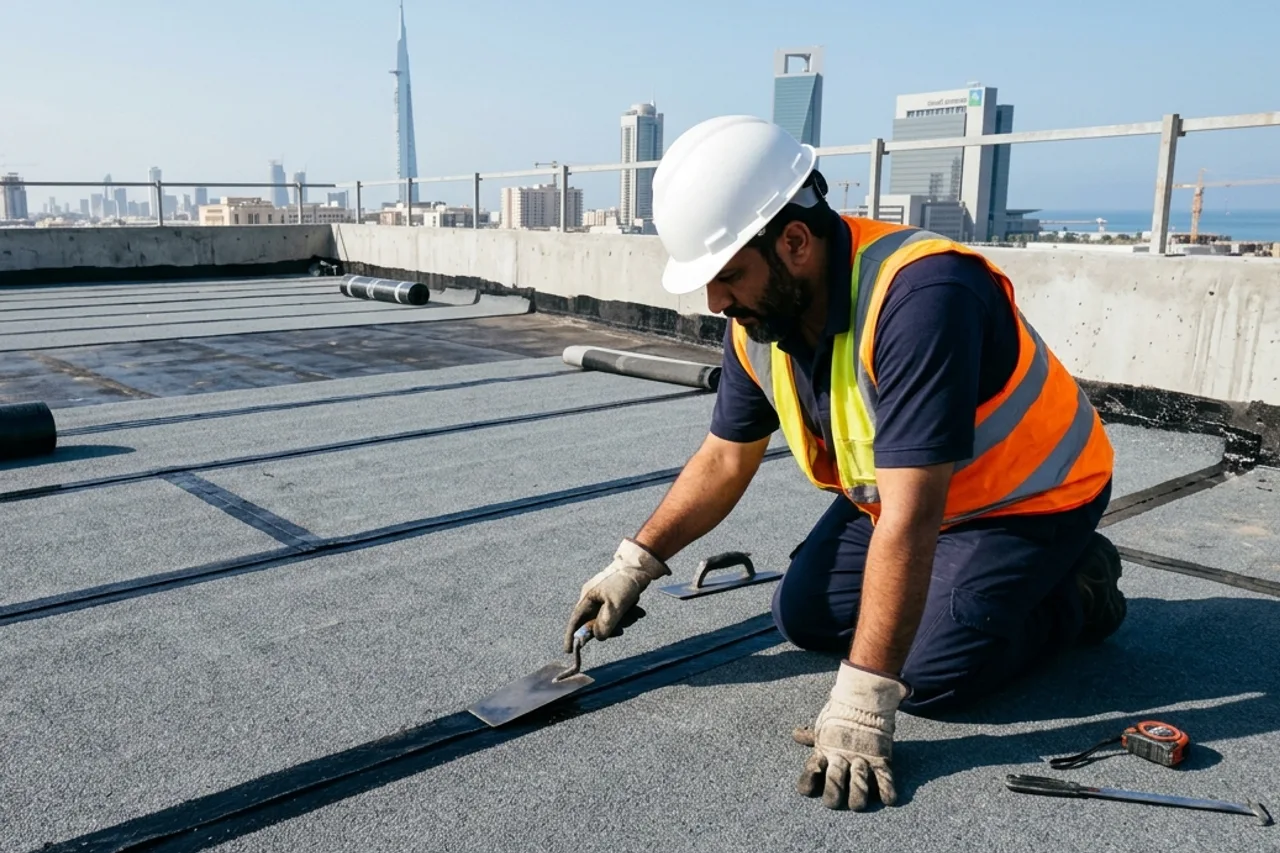
Waterproofing specialist inspecting overlapping seams of modified bituminous membrane rolls on a primed concrete roof deck in Jeddah and MakkahBituminous Waterproofing Jeddah

Bituminous Membrane Waterproofing in Jeddah — Reinforced Roll Systems for Roofs & Foundations

In Jeddah, polymer-modified bituminous membranes are widely used on new villa roof slabs and substructure foundations to guard against coastal groundwater and soil salinity.

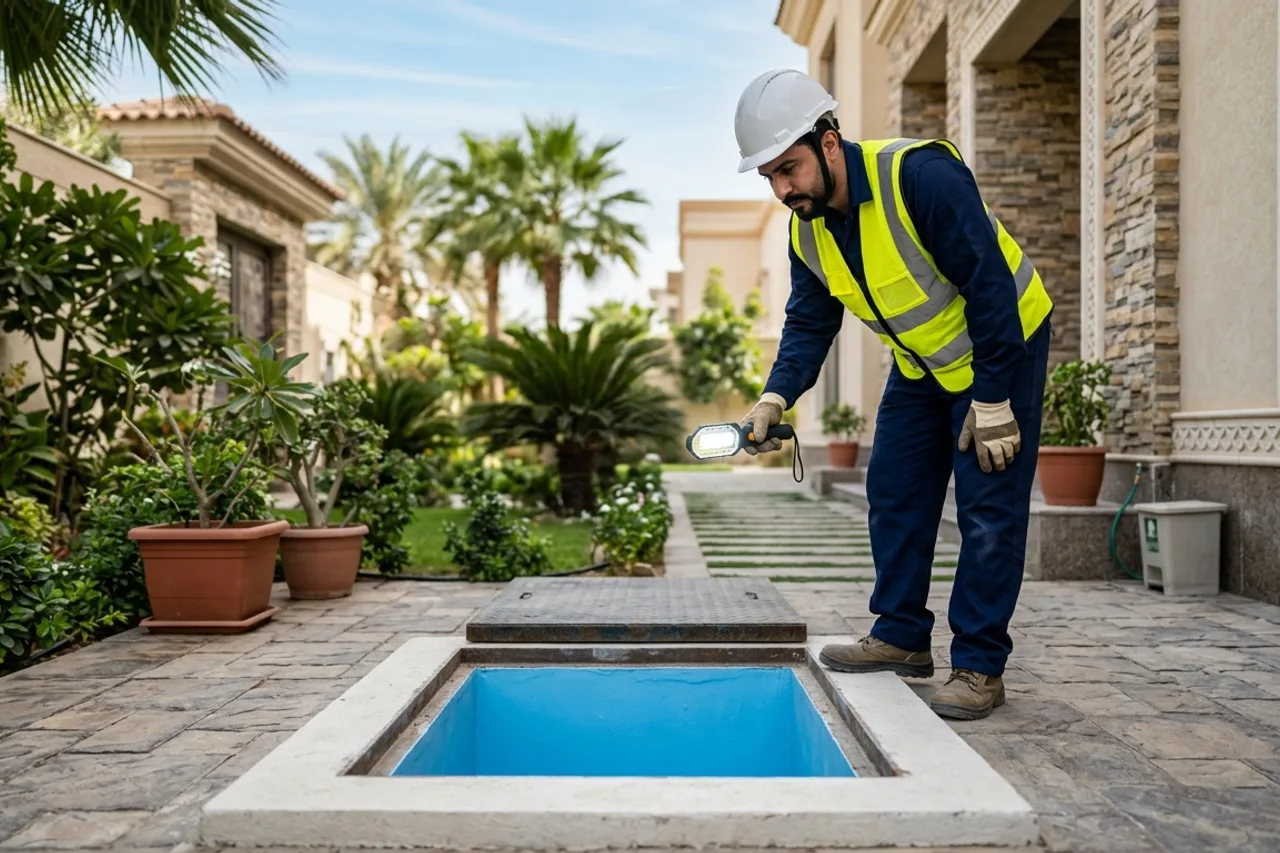
Waterproofing engineer safely inspecting the concrete collar and internal waterproof lining of an underground water tank in Jeddah and MakkahWater Tank Waterproofing Jeddah

Water Tank Waterproofing in Jeddah — Engineered Concrete Cistern Linings & Groundwater Protection

In Jeddah, shallow saline groundwater (Sabkha) across coastal and northern districts is the primary engineering challenge for underground tanks—exerting inward negative hydrostatic pressure that blisters unbacked coatings.

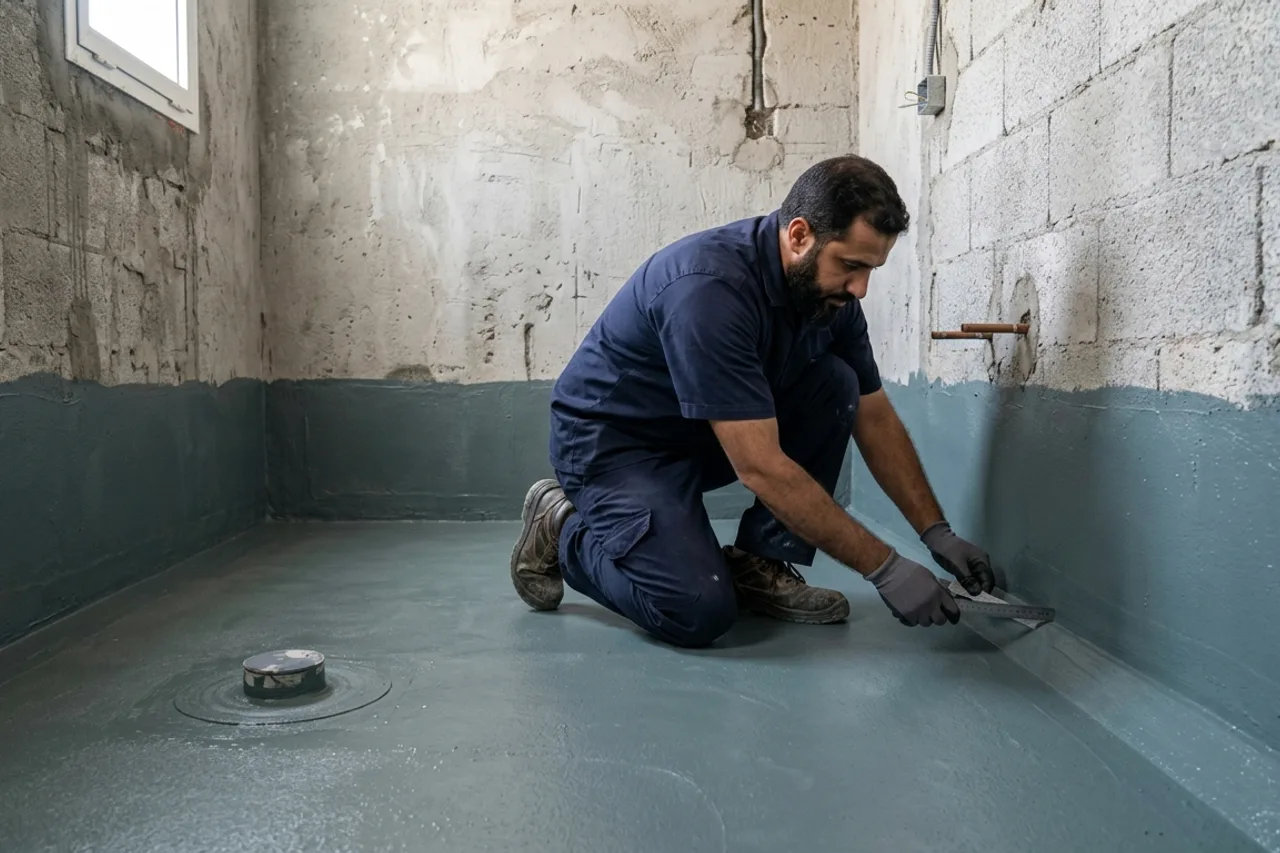
Engineer inspecting flexible cementitious waterproofing membrane, wall upturns, and floor drain collar inside a bathroom prior to tiling in Jeddah and MakkahBathroom Waterproofing Jeddah

Bathroom & Kitchen Waterproofing in Jeddah — Complete Wet-Area Membrane Systems

Modern villas and apartments in Jeddah widely feature large-format porcelain tiles, curbless walk-in showers, and concealed wall cisterns—all requiring high-bond flexible cementitious waterproofing beneath tile adhesives.

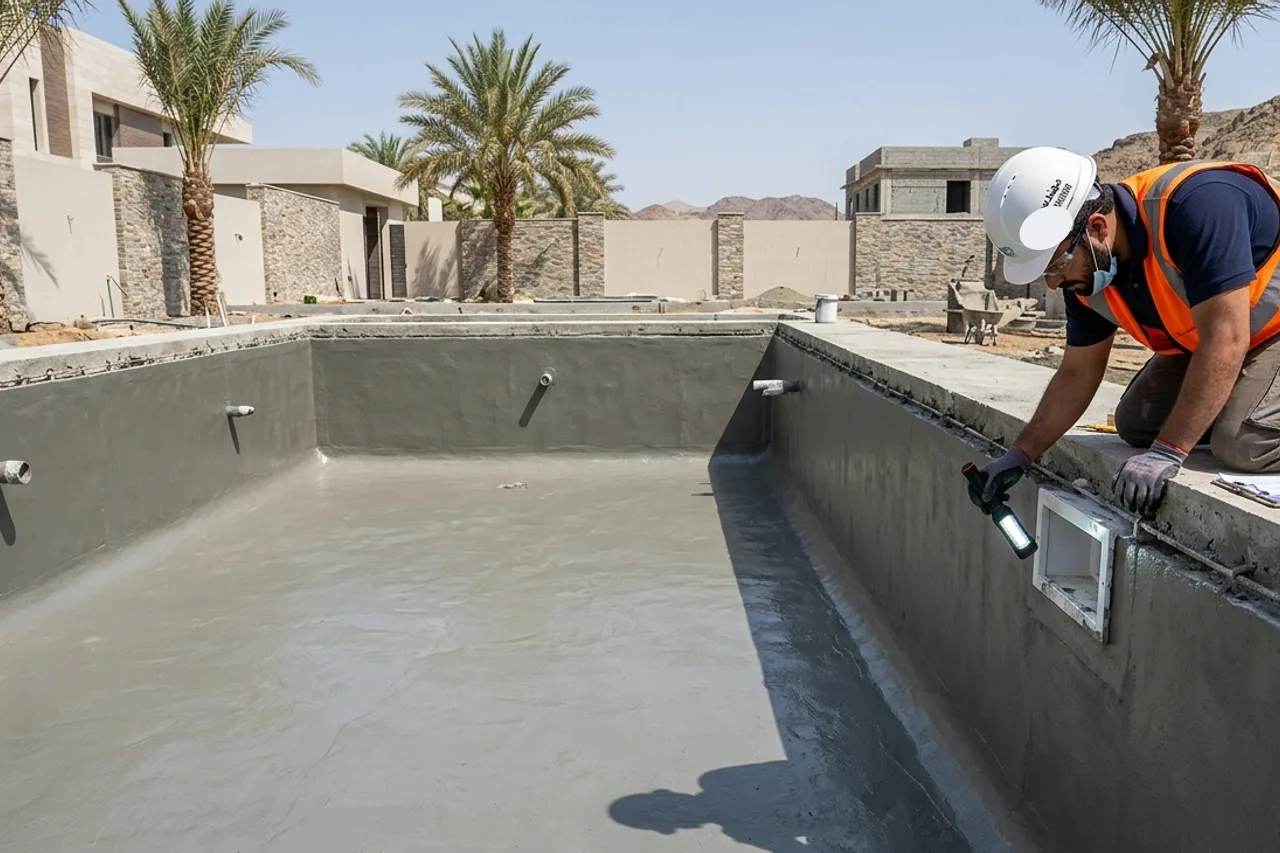
Waterproofing engineer inspecting concrete swimming pool coping, skimmer throat, and under-tile membrane zones in Jeddah and MakkahSwimming Pool Waterproofing Jeddah

Swimming Pool Waterproofing in Jeddah — Flexible Under-Tile Membranes & Fitting Seal Detailing

Private swimming pools are widespread across North and West Jeddah villas (Obhur, Al-Murjan, Al-Shati, Al-Basateen) and East Jeddah resorts (Al-Hamdaniyah). High coastal water tables in Obhur and Al-Shati require negative-side groundwater resistance when pools are drained.

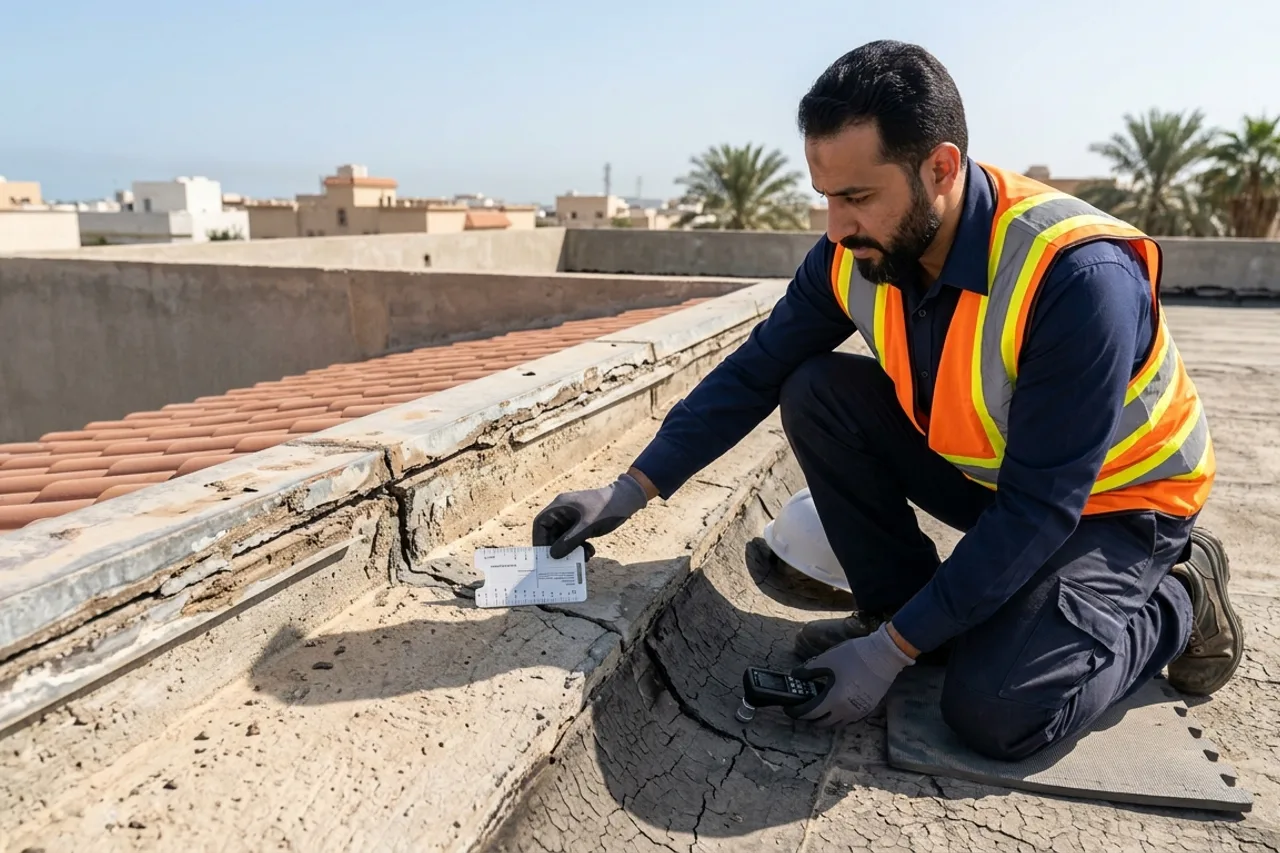
Waterproofing specialist inspecting and repairing a cracked and delaminated section of old roof waterproofing in Jeddah and MakkahWaterproofing Repair Jeddah

Waterproofing Repair & Restoration in Jeddah — Remedying Blistered, Cracked & Aging Membranes

In Jeddah, coastal humidity and high UV radiation accelerate the aging of exposed topcoats and expansion joint sealants, while sudden heavy winter rainstorms quickly expose unsealed parapet upstands and roof drains.

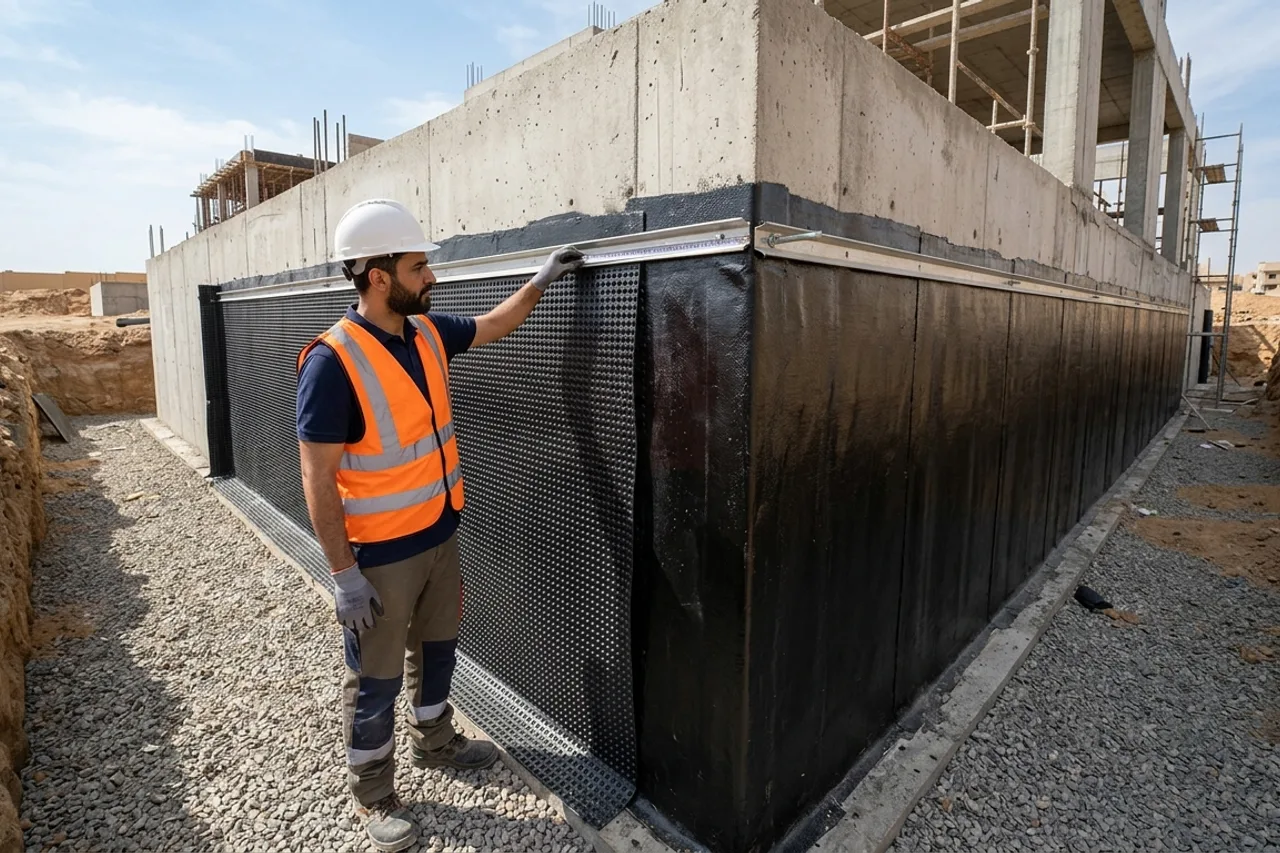
Waterproofing engineer inspecting foundation wall and basement waterproofing membrane prior to backfilling in Jeddah and MakkahBasement and Foundation Waterproofing Jeddah

Basement & Foundation Waterproofing in Jeddah — Substructure Protection Against Coastal Groundwater & Sabkha Salts

Many coastal Jeddah districts (North/South Obhur, Al-Shati, Al-Murjan, Al-Basateen, Al-Hamra) feature saline sabkha soils and shallow groundwater tables. Engineered foundation and basement waterproofing in Jeddah is critical under SBC 303 principles to prevent rapid chloride/sulfate rebar corrosion.

Interactive Smart Insulation & Waterproofing Finder

Select Your Property Parameters for an Instant Engineering Recommendation

Recommended Waterproofing / Insulation Service in Jeddah:

Complete Roof Waterproofing (Concrete & Tiled Roofs)

Proposed Engineering Assembly: Reinforced Liquid Polyurethane Membranes or Bituminous Assemblies Matched to Deck State

Delivers complete roof rainwater protection with full slope, parapet coving, and drain collar detailing.

Interactive Waterproofing & Insulation System Guide

Material & System Comparison: Where Each System Excels & Its Technical Limits

Filter by building zone to compare each system across water exposure, solar UV resistance, foot traffic, protective layers, and substrate constraints:

Sheet Membrane Waterproofing

Modified Bituminous Membranes (APP / SBS Rolls)

Primary Use Cases & Compatible Substrates:

Concrete roofs prior to tiling, buried foundations, retaining walls, and exposed non-traffic roofs (when using mineral slate-surfaced APP rolls).

Substrates: Smooth reinforced concrete slabs and cured slope-screed beds primed with compatible bituminous primer.

Water Exposure Rating:

High resistance to rainwater ponding and subsurface dampness when side (10 cm) and end (15 cm) lap seams are fully fused.

Solar & UV Resistance:

Smooth rolls require UV cover; mineral-slate-surfaced APP membranes resist direct solar radiation on non-trafficked roofs.

Foot Traffic Suitability:

Low when exposed — requires geotextile separation felt and protective screed/tiling for regular foot traffic.

Protective Layer Needed:

Yes on trafficked roofs and buried foundations (protection boards or non-woven geotextile felt beneath screed/backfill).

Technical Limitations & Precautions:

Not suitable for internal potable water tanks or swimming pools; seam integrity depends heavily on skilled lap detailing.

Grinding sharp concrete projections, forming 45° cementitious cant strips at wall junctions, and applying bituminous primer.View Service Page
Two-Component Slurry Waterproofing

Polymer-Modified Flexible Cementitious Waterproofing

Primary Use Cases & Compatible Substrates:

Bathrooms and wet zones prior to tiling, concrete water tanks, swimming pool shells under mosaic tiles, and foundations.

Substrates: Sound reinforced concrete, cementitious renders, and plastered masonry brought to a saturated-surface-dry (SSD) state.

Water Exposure Rating:

Engineered for continuous water immersion (tanks and pools) and both positive and selected negative hydrostatic pressure.

Solar & UV Resistance:

Moderate to low under prolonged direct desert sun — designed to be covered by ceramic/mosaic tiles or protective coatings.

Foot Traffic Suitability:

Tolerates light installation traffic once cured, but requires protective tiling or screed for permanent foot traffic.

Protective Layer Needed:

Yes on floors and decks (ceramic/porcelain tiling with compatible C2TE/S1 flexible adhesive or protective screed).

Technical Limitations & Precautions:

Lower crack-bridging elongation than pure polyurethane membranes; not intended as an exposed roof coating over wide thermal joints.

Removing laitance and form oils, repairing honeycombing with non-shrink mortar, and pre-wetting substrate without standing water.View Service Page
Seamless Liquid-Applied Waterproofing

Liquid-Applied Acrylic & Hybrid Elastomeric Membranes

Primary Use Cases & Compatible Substrates:

Sloped exposed roofs without heavy ponding, UV-protective topcoat over spray polyurethane foam, and parapet/roof restoration.

Substrates: Concrete, cementitious screed, closed-cell spray polyurethane foam (SPF), and properly abraded/primed tiled surfaces.

Water Exposure Rating:

Effective against shedding rainwater; pure acrylics are not recommended for permanent ponding water unless PU-hybridized.

Solar & UV Resistance:

Excellent — highly resistant to UV degradation and maintains elasticity and solar-reflective white/light finish.

Foot Traffic Suitability:

Suitable for light maintenance foot traffic; requires full fleece reinforcement or pedestrian-grade PU topcoat for regular traffic.

Protective Layer Needed:

No UV cover required as the membrane itself is formulated for direct solar exposure.

Technical Limitations & Precautions:

Unsuitable for submerged tanks or pools, and cannot compensate for severe negative roof slopes causing deep standing water.

Thorough cleaning, dry substrate, hairline crack sealing, and application of a porosity-matched primer.View Service Page
High-Elongation Seamless Polyurethane Membrane

High-Elastomeric Liquid Polyurethane Waterproofing Systems

Primary Use Cases & Compatible Substrates:

Concrete and tiled roofs subject to ponding water, balconies, terraces, and complex rooftop mechanical zones.

Substrates: Dry concrete (<4–5% moisture content), and existing ceramic/porcelain tiles after mechanical grinding and specialized epoxy/PU primer.

Water Exposure Rating:

Superior resistance to standing/ponding rainwater with high crack-bridging elongation across thermal cycles.

Solar & UV Resistance:

Aromatic base coats require an Aliphatic polyurethane UV-stable topcoat when left exposed to direct sunlight.

Foot Traffic Suitability:

Good to high durability when finished with a pedestrian-grade aliphatic polyurethane wear coat.

Protective Layer Needed:

Requires an aliphatic UV topcoat if exposed, or silica-sand broadcast / geotextile layer if tiled over.

Technical Limitations & Precautions:

Will delaminate or blister if applied over existing tiles whose underlying sand bed is saturated with trapped water.

Dielectric moisture testing, mechanical surface profiling, polyurethane joint sealant detailing, and compatible primer coat.View Service Page
Building Envelope Thermal Insulation (SBC 601 / 602 Context)

Rigid Thermal Insulation Boards (XPS / EPS / PIR)

Primary Use Cases & Compatible Substrates:

Villa, residential, and commercial flat roofs (in inverted or conventional roof assemblies) to reduce conductive heat transfer.

Substrates: Installed over tested waterproofing membranes (in inverted roof systems with geotextile filter fabric) beneath ballast or tiles.

Water Exposure Rating:

Extruded polystyrene (XPS) boards have low water absorption, but board joints are NOT waterproof—a separate waterproofing membrane is mandatory.

Solar & UV Resistance:

Degrades under direct UV and wind uplift — must always be covered by geotextile fabric and gravel ballast, tiles, or screed.

Foot Traffic Suitability:

Supports foot traffic once covered by load-distributing screed or paving slabs matched to the board compressive strength.

Protective Layer Needed:

Mandatory (non-woven geotextile filter layer + heavy ballast, paving tiles, or screed to prevent UV degradation and wind uplift).

Technical Limitations & Precautions:

Never stops water leaks on its own; strictly serves as the thermal resistance component of a multi-layer roof system.

Flood-testing and verifying the underlying waterproofing membrane first, ensuring a flat, debris-free bed.View Service Page
Seamless Thermal & Moisture Barrier System (Requires UV Topcoat)

Closed-Cell Spray Polyurethane Foam (SPF System)

Primary Use Cases & Compatible Substrates:

Exposed concrete roofs, corrugated metal/warehouse roofs, and roofs with dense HVAC/piping penetrations requiring seamless encapsulation.

Substrates: Dry, clean concrete decks, primed/rust-free metal decks, and solid substrates free of moisture, oil, and loose dust.

Water Exposure Rating:

Closed-cell SPF finished with a continuous elastomeric/acrylic topcoat provides reliable rainwater resistance when proper drainage slopes exist.

Solar & UV Resistance:

Raw polyurethane foam oxidizes and chalks rapidly under UV rays — a UV-resistant elastomeric topcoat is mandatory.

Foot Traffic Suitability:

Moderate (handles careful maintenance traffic); sharp tools or dragging heavy mechanical equipment can puncture the topcoat.

Protective Layer Needed:

Mandatory: UV-protective elastomeric acrylic/polyurethane coating, or geotextile separation felt beneath screed/tiles.

Technical Limitations & Precautions:

Open-cell foam is unsuitable for exterior roofs, and any neglected breach in the UV topcoat exposes the foam to solar degradation.

Pressure washing and complete drying, removing loose mortar, and masking adjacent AC units, solar panels, and parapets.View Service Page
Continuous-Immersion Waterproofing & Concrete Lining

Specialized Water Tank & Pool Coatings (Epoxy & Hydraulic Mortars)

Primary Use Cases & Compatible Substrates:

Internal lining of reinforced concrete water tanks (using certified potable-water systems) and swimming pool structural shells.

Substrates: Mechanically profiled reinforced concrete with all honeycombing, tie-rod holes, and active negative leaks sealed first.

Water Exposure Rating:

Specifically engineered for 24/7 continuous water immersion and resistance to chlorides and treatment chemicals.

Solar & UV Resistance:

Internal tank epoxies are designed for enclosed tanks (low UV stability); outdoor pools use flexible cementitious membranes under tiles.

Foot Traffic Suitability:

High abrasion resistance during periodic tank cleaning once the full manufacturer curing schedule is completed.

Protective Layer Needed:

Potable tank epoxy serves as the final smooth lining; pool cementitious waterproofing is covered by mosaic tiles and chemical-resistant grout.

Technical Limitations & Precautions:

Never assume generic industrial epoxy is potable-water safe — requires verified potable-water compliance documentation and full cure time.

Ventilating the tank, grinding concrete laitance, routing and plugging cracks with hydraulic mortar, forming corner fillets, and drying.View Service Page

Important Engineering Note: This guide provides an engineering comparison of material families; final system specification, primer pairing, and layer build-up are determined after an on-site substrate and moisture assessment per manufacturer TDS.

Field Service Coverage Across Jeddah Districts

Serving All Residential & Commercial Districts Across Jeddah

North Jeddah & Obhur Corridor: North Obhur, South Obhur, Al-Murjan, Al-Shati, Al-Basateen, Al-Mohammedia, Al-Naeem, Al-Nahdah, Al-Zahra.
Central & West Jeddah: Al-Rawdah, Al-Salamah, Al-Khalidiyah, Al-Hamra, Al-Andalus, Al-Faisaliyah, Al-Bawadi, Al-Rabwah, Al-Safa, Al-Marwah.
East & South Jeddah: Al-Samer, Al-Hamdaniyah, Al-Manar, Al-Ajaweed, Al-Sanabel, Al-Khumrah, and commercial/warehouse zones.
Verified Geotechnical & District Coverage Intelligence — 42 Core Districts

Engineering Coverage, Soil & Building Matrix in Jeddah

Coastal environment with high relative humidity (65%–85%), elevated saline groundwater table (coastal Sabkha) along the western corridor and Obhur, and alluvial/clay soils in eastern districts, amplifying negative hydrostatic pressure on underground tanks, basements, and reinforcement steel corrosion.

North Coastal & Obhur Corridor

Soil & Water Table: Coastal sandy Sabkha soil saturated with highly saline, sulfate-rich groundwater at 1.2m to 2.5m depth

  • •Negative hydrostatic pressure on underground tanks, swimming pools, and basements
  • •Capillary rising damp, salt efflorescence, and lower-wall paint peeling
  • •Corrosion of buried supply lines and rebar oxidation in water tank necks
North Jeddah Residential Villa Districts

Soil & Water Table: Mixed coastal calcareous sandy soil with pockets of elevated surface water table

  • •Concrete swimming pool shell, skimmer throat, and return line leaks
  • •Courtyard irrigation and external pipe leaks driving sudden high water bills
  • •Thermal expansion stress on wide flat villa roofs and tiled roof decks
North-Central Residential & Commercial Corridor

Soil & Water Table: Relatively stable sandy-silty soil with dense urban water and drainage infrastructure

  • •Inter-floor bathroom and kitchen leaks in residential buildings and villas
  • •Degraded tile grout joints and aging roof waterproofing membranes
  • •Float valve malfunctions and shared underground water tank leaks
Central-West Established & Coastal Districts

Soil & Water Table: Humid coastal soil near the Red Sea with established structures requiring restorative maintenance

  • •Cracking of aged bituminous rolls and rainwater ponding on roofs
  • •Concealed internal supply pipe leaks behind walls and under tiles
  • •Deterioration of internal cementitious render inside underground tanks
East & North-East Jeddah Expansion Corridor

Soil & Water Table: Clay/alluvial soil along historical wadi beds and engineered backfill in newer subdivisions

  • •Differential soil settlement stressing courtyard pipes and tank necks
  • •Construction joint cracks in newly built underground concrete tanks
  • •High demand for dual thermal and waterproofing spray foam systems on roofs
South Jeddah Residential & Logistic Corridor

Soil & Water Table: Saline coastal clay-sandy Sabkha soil

  • •Underground tank water loss and saline groundwater infiltration
  • •Metal deck (Shinko) and concrete roof waterproofing
  • •Ground-beam and foundation dampness in ground floors

North Obhur District

Jeddah
Confirmed Coverage

Building Profile: Modern coastal villas and compounds featuring swimming pools and underground tanks near sea level

Soil & Environment: Very high, saline groundwater table (coastal Sabkha)

Common Local Issues:
  • Underground tank level drop or salinity spikes from negative pressure
  • Lower-wall rising damp and paint peeling on ground floors
  • Swimming pool shell and skimmer pipe leaks

South Obhur District

Jeddah
Confirmed Coverage

Building Profile: Private coastal villas and residences with wide courtyards, pools, and basements

Soil & Environment: Moisture- and salt-saturated coastal sandy soil

Common Local Issues:
  • Concrete pool shell and ceramic joint leaks
  • Buried courtyard supply pipe leaks
  • Groundwater seepage into basements and underground tanks

Al Murjan District

Jeddah
Confirmed Coverage

Building Profile: Upscale villas with expansive roofs, swimming pools, and landscaped courtyards

Soil & Environment: Direct marine environment with high humidity and salinity

Common Local Issues:
  • Rainwater seepage through tiled roofs and annexes
  • High water bills from irrigation networks and float valves
  • Degradation of pool and tank waterproofing

Al Basateen District

Jeddah
Confirmed Coverage

Building Profile: Modern standalone residential villas and duplexes

Soil & Environment: Calcareous sandy soil with pockets of shallow groundwater

Common Local Issues:
  • Concealed under-tile bathroom leaks
  • Residential pool water level drop
  • Demand for combined thermal and waterproofing roof insulation

Al Mohammadiyah District

Jeddah
Confirmed Coverage

Building Profile: Established and modern residential villas with courtyards and large underground tanks

Soil & Environment: Medium-salinity coastal sandy soil

Common Local Issues:
  • Courtyard pipe and main meter-to-tank line leaks
  • Cracking of aged roof waterproofing
  • Bathroom ceiling leaks into lower floors

Al Shati District

Jeddah
Confirmed Coverage

Building Profile: Coastal villas and residential/commercial buildings near the Corniche

Soil & Environment: High-salinity coastal Sabkha soil

Common Local Issues:
  • Groundwater seepage into underground tanks and basements
  • Lower-wall dampness and plaster salt efflorescence
  • Roof waterproofing against coastal humidity and rain

Al Naeem District

Jeddah
Confirmed Coverage

Building Profile: Modern and mid-age residential villas and apartment buildings

Soil & Environment: Urban sandy-silty soil

Common Local Issues:
  • Sudden high water bills
  • Bathroom and kitchen plumbing leaks
  • Epoxy or cementitious underground tank waterproofing

Al Nahdah District

Jeddah
Confirmed Coverage

Building Profile: Residential villas and ownership apartments

Soil & Environment: Compact urban sandy soil

Common Local Issues:
  • Inter-apartment bathroom ceiling water leaks
  • In-wall pipe leaks
  • Tiled roof waterproofing

Al Zahra District

Jeddah
Confirmed Coverage

Building Profile: Upscale residential villas and commercial-residential buildings

Soil & Environment: Inland coastal soil with moderate moisture

Common Local Issues:
  • Swimming pool and underground tank leaks
  • Non-destructive leak detection under porcelain and marble
  • Roof waterproofing repair and restoration

Al Salamah District

Jeddah
Confirmed Coverage

Building Profile: High-density apartment buildings and mid-age villas

Soil & Environment: Urban soil with mixed legacy and modern plumbing networks

Common Local Issues:
  • Aging bathroom supply pipes and floor drains
  • High water bills in multi-unit buildings
  • Cracked underground tank waterproofing

Al Rawdah District

Jeddah
Confirmed Coverage

Building Profile: Established residential villas and commercial buildings

Soil & Environment: Coastal sandy soil near shallow groundwater

Common Local Issues:
  • Lower-wall dampness and peeling paint
  • Concealed kitchen and bathroom leaks
  • Restoration of roof waterproofing and bituminous membranes

Al Khalidiyah District

Jeddah
Confirmed Coverage

Building Profile: Palaces, villas, and residential compounds in West Jeddah

Soil & Environment: Humid, high-salinity coastal soil

Common Local Issues:
  • Large pool and underground tank leaks
  • Basement and foundation dampness
  • External supply line leaks

Al Hamra District

Jeddah
Confirmed Coverage

Building Profile: Established residential, hospitality, and villa structures near the sea

Soil & Environment: Humid marine environment with high groundwater table

Common Local Issues:
  • Underground tank concrete spalling and rebar corrosion
  • Rainwater ingress through older roofs
  • Buried pipe leaks

Al Faisaliyah District

Jeddah
Confirmed Coverage

Building Profile: Mid-age apartment buildings and villas

Soil & Environment: Central Jeddah urban soil

Common Local Issues:
  • Inter-floor bathroom leaks
  • High water bills caused by underground tanks
  • Roof waterproofing and thermal insulation

Al Safa District

Jeddah
Confirmed Coverage

Building Profile: High density of apartment buildings and residential units

Soil & Environment: Densely occupied urban sandy-silty soil

Common Local Issues:
  • Bathroom ceiling water leaks into lower apartments
  • High shared water bills
  • Underground tank cracks in apartment buildings

Al Marwah District

Jeddah
Confirmed Coverage

Building Profile: Modern apartment buildings and duplex villas

Soil & Environment: Mixed sandy-rocky and silty soil

Common Local Issues:
  • Tank neck and float valve leaks
  • Bathroom and kitchen leaks
  • Polyurethane spray foam roof insulation

Al Harazat District

Jeddah
Confirmed Coverage

Building Profile: Villas, rest houses (Istirahat), and residential buildings with large ground tanks

Soil & Environment: Alluvial wadi and rocky terrain with varying elevations

Common Local Issues:
  • Underground tank cracks from soil movement
  • Pool leaks in rest houses and villas
  • Concrete and metal (Shinko) roof insulation

Al Samer District

Jeddah
Confirmed Coverage

Building Profile: Apartment buildings and villas east of the highway

Soil & Environment: Alluvial silty soil retaining moisture after rainy seasons

Common Local Issues:
  • Rainwater seepage through roofs
  • Ground-floor and tank dampness
  • Supply pipe leaks

Al Hamdaniyah District

Jeddah
Confirmed Coverage

Building Profile: Duplex villas and newly constructed residential projects

Soil & Environment: Engineered backfill and clay soil prone to differential settlement

Common Local Issues:
  • Courtyard pipe and tank neck fractures due to slab settlement
  • Primary waterproofing defects in new bathrooms and roofs
  • High water bills shortly after occupancy

Taibah District

Jeddah
Confirmed Coverage

Building Profile: Newly built or under-construction villas and residential buildings in North-East Jeddah

Soil & Environment: Sandy-rocky desert soil with recent construction backfill

Common Local Issues:
  • Foundational underground tank and basement waterproofing for new builds
  • Thermal and waterproofing spray foam for roofs
  • Plumbing network pressure testing before and after occupancy

Al Sanabel District

Jeddah
Confirmed Coverage

Building Profile: Residential villas and modern apartment buildings in South Jeddah

Soil & Environment: Sandy-clay soil near the southern coastal belt

Common Local Issues:
  • Underground tank leaks and high water bills
  • Ground-floor lower-wall dampness
  • Tiled and concrete roof waterproofing

Al Khumrah District

Jeddah
Confirmed Coverage

Building Profile: Residential structures, warehouses, and metal-roof (Shinko) facilities in South Jeddah

Soil & Environment: High-salinity coastal Sabkha soil

Common Local Issues:
  • Polyurethane spray foam insulation for Shinko metal roofs
  • Protecting tanks and foundations from saline dampness
  • External supply line leaks

Field Dispatch Note: Mobile diagnostic and waterproofing engineering crews operate daily across all verified Jeddah and Makkah districts listed above via scheduled appointments.

Read Full Jeddah & Makkah Soil & Building Engineering Guide
Engineering Guides, Symptom Diagnosis & Material Comparisons

Diagnostic & Engineering Comparison Guides to Help You Decide

Browse All 12 Engineering Guides
Moisture Symptom Diagnostic Guide11 min

Lower Wall Dampness & Peeling Paint Causes: How to Distinguish Plumbing Leaks from Rising Damp

Paint blistering or white crystalline salt deposits 15 to 60 cm above floor skirting boards are never a cosmetic issue solved by repainting—they are physical indicators of active moisture migration that must be traced at the source.

Read Engineering Guide & Comparison
Bathroom Ceiling Leak Diagnostic Guide11 min

Water Leaking from the Bathroom Ceiling: How to Pinpoint the Exact Source Upstairs Without Random Demolition

When yellow stains or active water drops appear on your bathroom ceiling or gypsum soffit, the source lies in the wet area directly above—but is the culprit a pressurized supply pipe, a drainage elbow, eroded tile grout, or a breached slab membrane?

Read Engineering Guide & Comparison
High Water Bill Diagnostic Guide12 min

Sudden High Water Bill Causes in Jeddah & Makkah: Step-by-Step Meter, Float Valve & Underground Tank Diagnostic Guide

When your monthly water bill doubles or triples with no change in household occupancy and zero visible dampness indoors, water is almost certainly escaping silently underground or directly into a drain line—here is how to isolate the culprit step by step.

Read Engineering Guide & Comparison
Pool Water Loss Diagnostic Guide11 min

Swimming Pool Water Level Drop in Jeddah & Makkah: How to Scientifically Separate Evaporation from Plumbing & Shell Leaks

Every outdoor pool loses water to evaporation under the intense heat of Jeddah and Makkah—but when does daily water loss cross the engineering threshold into an active skimmer, light conduit, filtration pipe, or structural shell leak?

Read Engineering Guide & Comparison
Roof Rain Ingress Diagnostic Guide11 min

Roof Rainwater Ponding & Top-Floor Ceiling Seepage: Why Rain Penetrates Flat Roofs & How to Engineer a Permanent Fix

Following heavy seasonal rainstorms in Jeddah or Makkah, damp stains and active leaks appear across top-floor ceilings and annexes—is the root failure poor screed slope, blocked roof drains, cracked parapet flashing, or a breached waterproofing membrane?

Read Engineering Guide & Comparison
Underground Tank Diagnostic Guide12 min

Underground Water Tank Level Drop & Salinity Intrusion in Jeddah & Makkah: Engineering Diagnosis & Permanent Remediation

Whether your underground tank empties rapidly forcing frequent water-tanker deliveries, or your household tap water in coastal Jeddah suddenly turns brackish and corrodes fixtures—the root cause lies in underground tank structural cracks and waterproofing failure.

Read Engineering Guide & Comparison
Engineering Scope & Quotation Request Engine

Build Your Project Scope & Request an Itemized Quote in Jeddah

We never quote misleading flat rates without evaluating your substrate. Select your project parameters below to generate your technical scope summary and schedule an engineer visit.

Itemized Engineering Quote ScopeJeddah
Target System: Multi-Layer Roof Waterproofing Systems (Liquid PU, Acrylic, Cementitious & Membrane)
Surface Prep Line Item: Mechanical grinding, crack/honeycomb repair, 45° coving, and compatible primer coat.
Critical Details & Protection: Sealing drains, expansion joints, pipe penetrations, and topcoat/protection verification.
Ready-to-Send Scope Summary:
Hello Bashaer Al Khair, I would like to request an inspection and quotation for waterproofing/insulation:
- Service: Roof Waterproofing Jeddah
- City: Jeddah
- Property Type: Residential Villa
- Approx. Area: 100 to 250 m² (Standard Villa Roof/Tank)
- Substrate State: New Concrete / Screed Ready for Insulation
Frequently Asked Questions in Jeddah

Engineering Answers for Property Owners in Jeddah

Can a tiled villa roof in Jeddah be waterproofed without removing the tiles?

It depends on the field assessment: if the tiles are firmly bonded and the underlying sand-screed bed is dry, the surface can be mechanically profiled, joints sealed, and coated with a compatible liquid polyurethane/hybrid system. However, if trapped water saturates the sub-tile bed, sealing over it directly will cause blistering, requiring moisture venting or tile removal first.

Why does underground water tank waterproofing peel off quickly in some Jeddah neighborhoods?

The primary cause in coastal Jeddah is applying a rigid epoxy coat directly onto tank walls subject to inward negative groundwater pressure without first installing a negative-pressure cementitious barrier and sealing structural cracks and neck joints.

What is the difference between requesting leak detection vs. waterproofing in Jeddah?

If you have unexplained dampness, a sudden water bill spike, or continuous ceiling dripping, start with Leak Detection to verify whether a pressurized pipe or drain has failed. If you are protecting a new roof/bathroom/tank or restoring weathered roof/tank insulation, Waterproofing & Thermal Insulation is the appropriate service.

Can tiled villa roofs in Jeddah be waterproofed without demolishing all existing tiles?

This depends on substrate inspection: if existing tiles are firmly bonded, the underlying sand bed is dry, and drainage slopes are adequate, a fiber-reinforced liquid polyurethane or elastomeric membrane system can be applied after joint and parapet prep. If the sand bed is waterlogged or tiles are hollow, moisture must be vented or damaged sections removed first.

Why do some epoxy coatings blister inside underground water tanks near the Jeddah coast?

Blistering occurs when epoxy is applied directly onto concrete walls subjected to inward coastal groundwater pressure (negative hydrostatic pressure) without a negative-side crystalline/cementitious barrier underneath. Bashaer Al Khair seals negative pressure first before applying food-grade epoxy.

CallWhatsApp