Bashaer Al Khair · Jeddah & Makkah|Active Service Coverage: Jeddah & Makkah
Bashaer Al Khair for Water Leak Detection & Waterproofing in Jeddah and Makkah
Solutions that begin by understanding the root cause—from non-destructive water leak inspection, moisture mapping, and high water bill diagnostics to selecting the right waterproofing and thermal insulation system for roofs, water tanks, swimming pools, and bathrooms.
We follow a structured engineering workflow that separates field diagnostics from remediation, preventing blind demolition or the application of incompatible insulation materials.
Pinpointing the leak source or substrate condition before recommending a treatment plan.
Clear Separation of Diagnostics & Insulation
Distinguishing pressurized plumbing faults from structural waterproofing and thermal insulation needs.
Tailored for Jeddah & Makkah
Accounting for Jeddah’s coastal humidity and salinity as well as Makkah’s intense solar heat and building profiles.
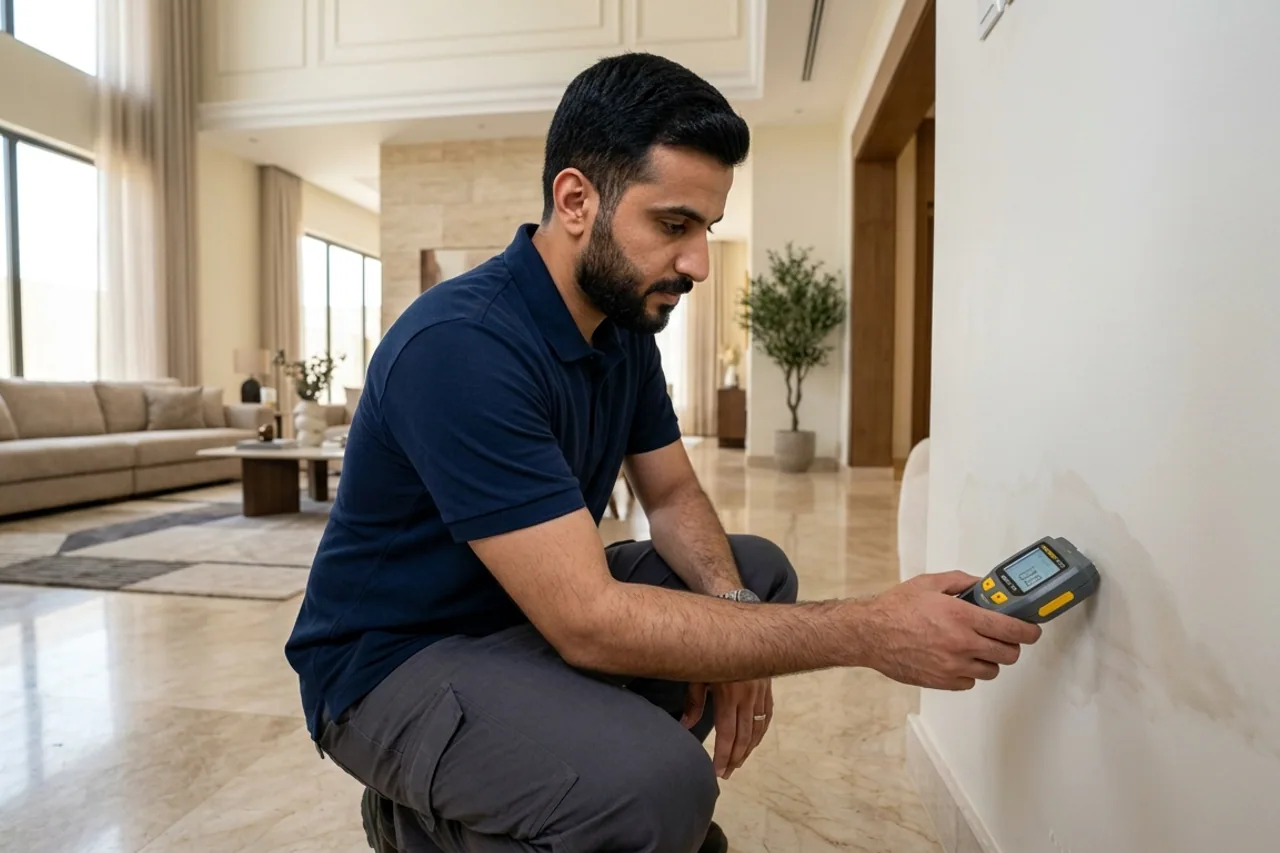
IllustrativeIllustrative visual representing non-destructive moisture and leak inspection methodology prior to defining the repair scope.
Interactive Technical Triage Tool
Find Your Service — Help Us Identify the Issue
Select the symptom you observe, your city, and your property type to view preliminary engineering guidance and prepare your inspection request.
1. What Is the Observed Problem or Symptom?
2. Select City
3. Select Property Type
4. Preliminary Service RecommendationJeddah · Villa
Recommended Technical Path:
High Water Bill Diagnostics (Tank, Float Valves, Cisterns & Buried Supply Lines)
Sudden spikes in water consumption are frequently linked to silent internal leaks in the underground water tank (faulty float valve or neck cracks), the main meter-to-tank supply line, or leaking toilet cisterns. A step-by-step isolation check starting at the meter and tank is recommended before any interior breaking.
What does the on-site assessment cover?
•Conducting meter isolation tests and checking the meter-to-tank supply line
•Inspecting all tank float valves and toilet flush mechanisms across the property
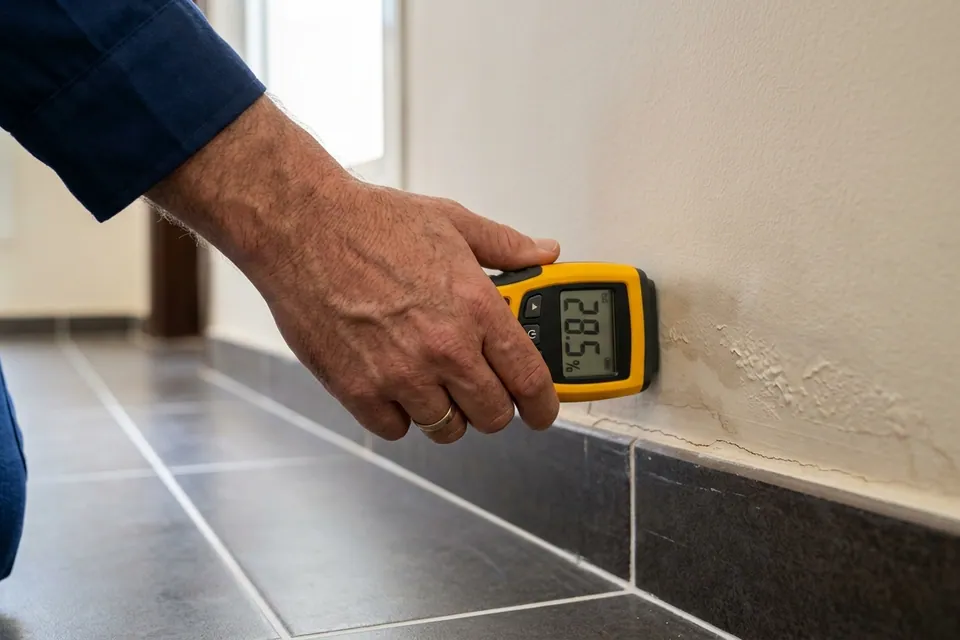
•Mapping lower-wall dampness and distinguishing rising damp from active pipe leaks
Professional Notice: This interactive selector provides preliminary orientation to help identify the relevant service track. It does not replace an on-site technical inspection, which is required for a definitive diagnosis.
Two Specialized Service Divisions Protecting Your Property from Water & Heat
Bashaer Al Khair operates across two clearly defined technical tracks in Jeddah and Makkah: Diagnostic Water Leak Detection to isolate the root fault, and Waterproofing & Thermal Insulation to protect structural elements.
5 Specialized Diagnostic Services
Water Leak Detection & Moisture Assessment
Structured technical assessment to pinpoint visible and hidden water leaks in pipelines, bathrooms, tanks, swimming pools, and under tiles with minimal structural disruption.
Comprehensive Water Leak Detection & Inspection
Systematic inspection of supply lines, drainage networks, and damp zones to identify the leak source before recommending targeted repair.
Continuous sound of running waterSudden damp spots on walls or ceilingsWater meter spinning with all fixtures closed
Bathroom & Kitchen Leak Detection
Technical differentiation between pressurized supply pipe leaks, drainage joint seepage, and failed floor grout or waterproofing membranes.
Water dripping from the ceiling below a bathroomDiscolored grout or loose floor tilesPeeling paint on walls adjacent to wet areas
Under-Tile & Buried Pipe Leak Detection
Locating leaks in buried pipelines beneath ceramic tiles, marble floors, and courtyard paving to prevent full-floor demolition.
Efflorescence or moisture seeping through tile jointsLocalized warm spots on floor tilesSettlement or hollowness in courtyard paving
Underground & Overhead Water Tank Leak Detection
Inspecting tank necks, float valves, meter-to-tank supply lines, and concrete tank walls and floors to verify water retention.
Rapid drop in underground tank water levelSudden spike in monthly water billsDamp soil or water pooling near the tank cover
Swimming Pool Leak Detection & Line Inspection
Accurate differentiation between natural evaporation loss and structural or plumbing leaks in the pool shell, skimmer, lights, or circulation lines.
Continuous drop in pool water level beyond evaporationDampness or settlement in deck tiles around the poolAir bubbles consistently entering circulation return lines
High Water Bill Diagnostics & Moisture Assessment
Field diagnostics of the primary causes of hidden water loss (tanks, float valves, toilet cisterns, buried lines) and wall dampness mapping.
Receiving a high water consumption alert or billWhite salt efflorescence and peeling paint on lower wallsWater meter registering flow when no taps are open
Waterproofing, Thermal Insulation & Building Protection
Tailored waterproofing and thermal insulation solutions for tiled and non-tiled roofs, polyurethane foam, underground and overhead tanks, bathrooms, and swimming pools.
Tiled & Non-Tiled Roof Waterproofing & Insulation
Protecting villa and building roofs against rainwater seepage and intense solar heat using systems matched to surface condition and drainage slope.
Rainwater ponding on the roofCeiling dampness or stains on the top floorExcessive heat gain in upper-floor rooms during summer
Seamless dual-purpose thermal and waterproofing spray foam system for suitable concrete and metal roofs, finished with UV protective coating.
Seeking combined thermal and waterproofing protection in one seamless layerRoofs with complex geometries or mechanical penetrationsReducing solar heat transfer through the roof slab
Underground & Overhead Water Tank Waterproofing
Internal waterproofing and crack remediation for concrete water tanks to stop outward water loss and prevent groundwater infiltration.
Visible cracks or peeling in existing tank liningGroundwater seepage affecting tank water clarityCommissioning a newly constructed concrete water tank
Waterproofing wet-area slabs and wall upturns during construction or renovation, plus targeted sealing solutions for existing tiled bathrooms.
During new bathroom/kitchen construction or remodelingDampness appearing on bedroom walls bordering a bathroomDeteriorated tile grout allowing shower water seepage
Swimming Pool Waterproofing & Joint Remediation
Multi-layer waterproofing for concrete swimming pool shells beneath mosaic/ceramic tiles, or targeted joint and lining remediation after inspection.
Preparing a concrete pool shell prior to mosaic or ceramic tilingRenovating or retiling an existing swimming poolFollowing inspection confirming seepage through the pool shell or joints
Have You Noticed Signs of a Water Leak or Insulation Failure?
Observing one of these signs does not automatically mean a major pipe rupture, but it warrants a methodical technical check to identify the true cause before moisture damages finishes or structural concrete.
01Symptom Indicator
Unusual Spike in Monthly Water Bill
A sharp increase in meter readings compared to normal usage, frequently linked to underground tank float valves, toilet cisterns, or main supply lines.
High Water Bill Diagnostics
02Symptom Indicator
Damp Spots or Discoloration on Walls
Gradual staining or damp halos appearing along walls adjacent to bathrooms, kitchens, or exterior facades exposed to rain.
In-Wall Leak & Moisture Assessment
03Symptom Indicator
Peeling Paint & White Salt Efflorescence
Blistering plaster and paint above skirting boards caused by moisture saturation, requiring source remediation prior to repainting.
Lower-Wall Moisture Diagnostics
04Symptom Indicator
Water Dripping or Staining on Ceilings
Damp patches or active drips on the ceiling below a bathroom or directly beneath the building roof after rain or daily water use.
Bathroom & Roof Leak Inspection
05Symptom Indicator
Continuous Drop in Swimming Pool Water Level
Water loss exceeding normal evaporation rates, pointing to potential seepage at the skimmer, light niches, circulation pipes, or shell joints.
Swimming Pool Leak & Waterproofing Check
06Symptom Indicator
Water Pooling or Dampness Near the Ground Tank
Persistent dampness around the tank hatch or settlement in nearby courtyard tiles, often tied to float valve overflow, neck cracks, or internal lining failure.
Underground Tank Inspection & Waterproofing
07Symptom Indicator
Cracked or Deteriorated Roof Insulation
Peeling protective topcoats, detached bituminous membrane seams at parapet corners, or standing water far from roof drains.
Roof Waterproofing & Insulation Restoration
Illustrative Visual
Professional Pre-Repair Guidance
Why Avoid Repainting or Retiling Before Finding the Moisture Source?
Technical Note: Surface dampness and internal plumbing leaks often produce similar visual symptoms; confirming the exact cause typically requires an on-site inspection.
How Our Technical Inspection & Service Process Works
We maintain a transparent, structured process from your initial inquiry through site assessment and agreed execution—without exaggerated claims or vague steps.
01
Describe the Symptom & Property Location
Share the observed signs (such as a high water bill, wall dampness, or a roof/tank needing insulation) along with your city (Jeddah or Makkah) and property type.
02
Determine Service Track or Inspection Need
We clarify whether your case calls for diagnostic leak detection first or a direct waterproofing site survey, and coordinate a convenient appointment.
03
On-Site Technical Assessment
Field evaluation of the relevant building elements (water meter, tank, supply/drainage lines, tile joints, or roof substrate) to establish an accurate diagnosis.
04
Explain Findings, Options & Scope of Work
We explain the root cause in clear terms and outline the appropriate remediation options, compatible materials, and preparation steps.
05
Agree on Execution Plan & Schedule
Once you review the proposed scope of work and site-based quotation, execution stages and timelines are clearly agreed upon.
06
Post-Service Verification & Follow-Up
Reviewing the completed work, ensuring site cleanliness, and verifying system stability in accordance with the agreed service scope.
Diagnostic Engineering
Understanding Different Types of Water Leaks & Inspection Methods
Not all water leaks behave the same way. A pressurized supply pipe leak exhibits completely different physical indicators than bathroom grout seepage or underground tank loss.
1. Visible Fixture & Valve Leaks
Leak Behavior & Signs:
Directly observable at shut-off valves, faucets, water heater connections, tank float valves, or toilet cisterns.
Inspection Approach:
Inspected visually and resolved by replacing the defective fitting or adjusting the float mechanism without invasive testing.
2. Concealed In-Wall Pipe Leaks
Leak Behavior & Signs:
Manifests as localized damp patches, blistering paint, or salt deposits along internal supply or drainage pipe risers.
Inspection Approach:
Assessed by isolating pipe runs, mapping moisture gradients, and using acoustic/thermal checks to localize the access point needed for repair.
3. Subsurface Under-Tile Leaks
Leak Behavior & Signs:
Causes persistent dampness between floor tile joints, localized warm spots over hot-water pipes, or settlement in courtyard paving.
Inspection Approach:
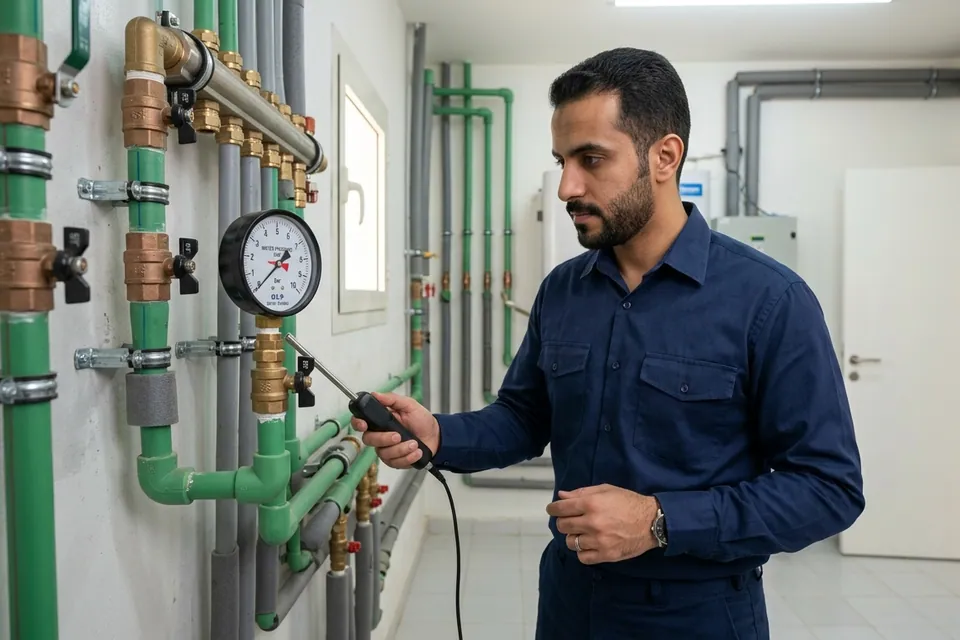
Tested by isolating cold and hot supply manifolds and monitoring pressure drops alongside surface thermal/acoustic scanning.
4. Underground & Overhead Water Tank Leaks
Leak Behavior & Signs:
Leads to sudden high water bills, rapid depletion of stored water, or groundwater infiltration contaminating the tank.
Inspection Approach:
Evaluated sequentially: testing the meter-to-tank supply line, checking the float valve, and inspecting the tank neck, walls, and floor slab.
5. Swimming Pool & Circulation Line Leaks
Leak Behavior & Signs:
Presents as a consistent water level drop exceeding natural evaporation rates in Jeddah and Makkah.
Inspection Approach:
Investigated across two stages: inspecting fittings and piping (skimmers, returns, main drains, light conduits) and checking the pool shell and tile joints.
Important Technical Clarification: Non-destructive inspection tools (such as acoustic listening devices, thermal imaging cameras, pinless moisture meters, and line pressure testing) help narrow down the suspected fault zone and minimize unnecessary breaking. However, every technology has physical boundaries depending on pipe depth, slab thickness, and surface finishes.
Supply line pressure check and network isolationIllustrative
Diagnostic tools are selected according to pipe material, burial depth, and surrounding finishes:
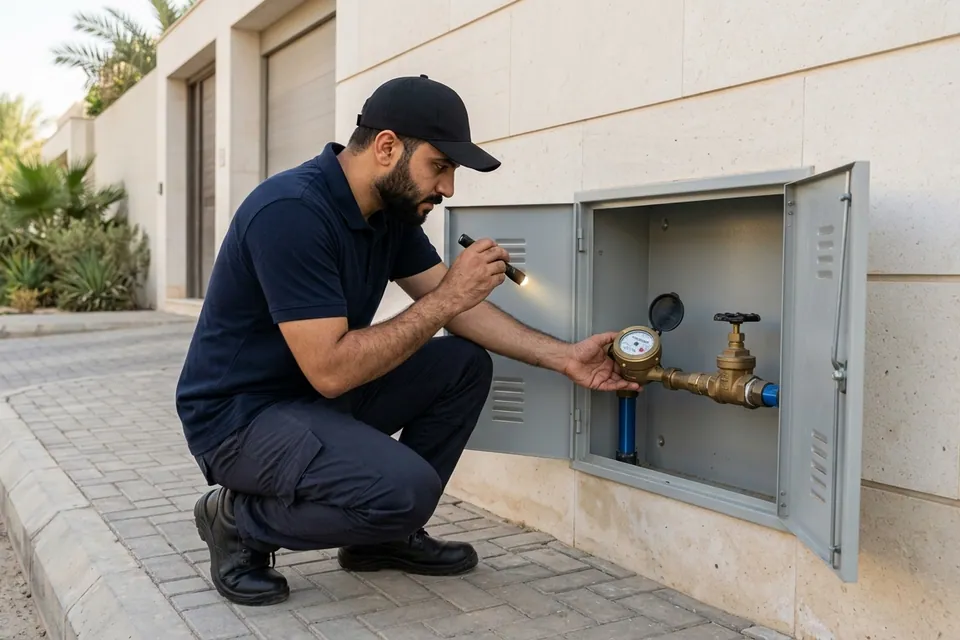
Checking the exterior water meter indicator as step one in high-bill diagnosisIllustrative
Educational Guide to Insulation Systems
Waterproofing & Thermal Insulation Systems: How the Right Solution Is Selected
No single waterproofing material is the universal solution for every building. Long-term performance depends on matching material properties to substrate condition, water pressure, and thermal exposure.
Roof & Substructure Waterproofing
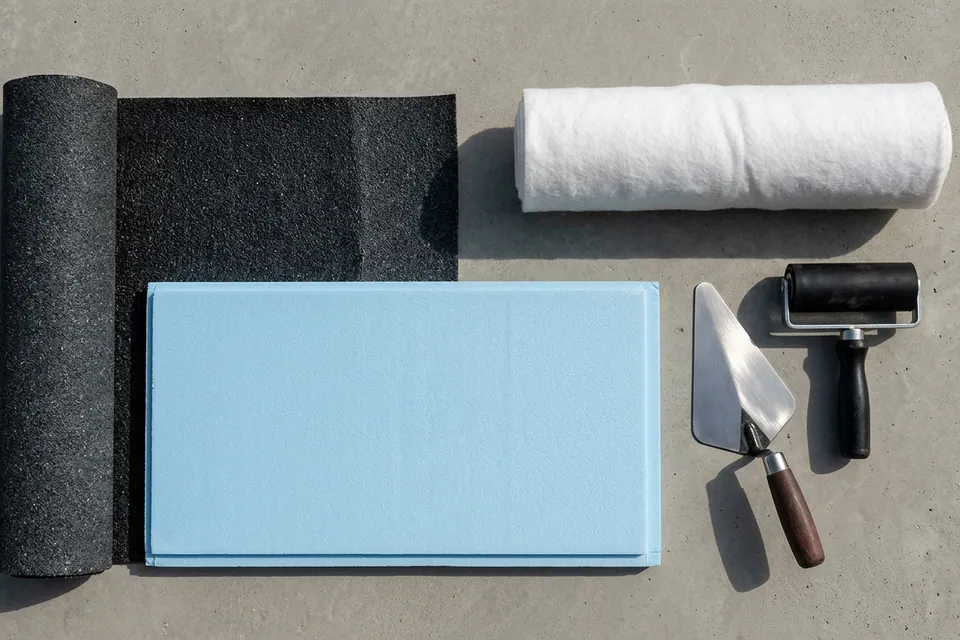
Sheet Waterproofing Membranes
Manufactured membranes of controlled thickness providing a continuous water barrier over properly sloped concrete slabs, requiring thorough primer preparation and sealed overlap seams.
Best Suited For:
Concrete roofs prior to tiling, substructures, and large flat roof areas.
Torch-Applied Rolls & Liquid Emulsions
Bituminous Waterproofing Systems
Includes modified bituminous rolls and cold-applied bituminous coatings used to protect foundations and concrete roofs, requiring UV protection or mineral slate surfacing when exposed to direct sunlight.
Best Suited For:
Foundational roof waterproofing, footings, neck columns, and retaining walls.
Dual Thermal & Waterproofing System
Polyurethane Spray Foam (SPF)
Liquid-applied foam that expands into a seamless monolithic layer covering complex corners and penetrations, combining thermal resistance and waterproofing when protected by a UV-resistant acrylic/elastomeric topcoat.
Best Suited For:
Non-tiled concrete roofs, roofs with dense mechanical penetrations, and metal roofs.
Wet Areas, Tanks & Swimming Pools
Flexible Cementitious Waterproofing
Polymer-modified two-component cementitious coatings that bond monolithically to concrete, resist positive and negative water pressure, and serve as an ideal base beneath ceramic or mosaic tiles.
Best Suited For:
Bathrooms and kitchens prior to tiling, concrete water tanks, and swimming pool shells.
Non-Porous Protective Linings
Epoxy & Liquid Polyurethane Coatings
Seamless liquid systems that cure into a smooth, non-porous barrier resistant to moisture and chemical wear, selected according to substrate requirements (internal tank linings or exposed decks).
Best Suited For:
Prepared concrete water tank interiors and specialized surface protection.
Energy Efficiency & Slab Protection
Thermal Roof Insulation Systems
Rigid thermal insulation boards (such as extruded polystyrene XPS) or foam layers that reduce solar heat transfer through roof slabs, lowering air-conditioning loads and reducing thermal expansion stress.
Best Suited For:
Residential villas, apartment buildings, and commercial roofs in Jeddah and Makkah.
Seven Engineering Factors Governing Material Selection:
1Substrate type (bare concrete slab, existing tiled roof, metal/corrugated roof, or submerged concrete tank wall).
2Building lifecycle stage (new construction foundational waterproofing vs. existing building maintenance and restoration).
3Water exposure profile (seasonal rainwater runoff, standing ponded water, or continuous hydrostatic pressure inside a tank or pool).
4Foot traffic and surface usage (non-accessible roof, maintenance walkways, or surfaces scheduled to receive tile finishes).
5Condition of previous insulation layers (whether localized restoration is viable or full removal and substrate preparation are required).
6Chemical and physical compatibility (primer adhesion, compatibility between waterproofing membranes and tile adhesives).
7Safety and energy efficiency standards (especially for domestic water storage tanks and thermal roof insulation).
Multiple insulation families require matching material specs to the substrate condition.Illustrative
Localized Engineering Coverage
Water Leak Detection & Waterproofing in Jeddah and Makkah
We serve residential and commercial properties across Jeddah and Makkah, adapting our inspection focus and insulation recommendations to each city’s distinct environmental and architectural profile.
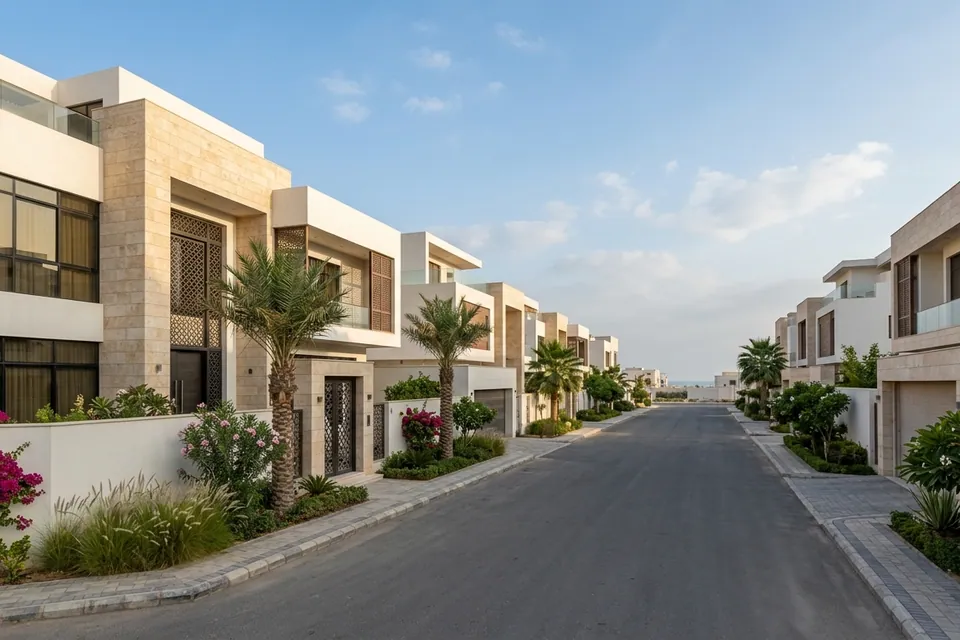
Illustrative — Jeddah
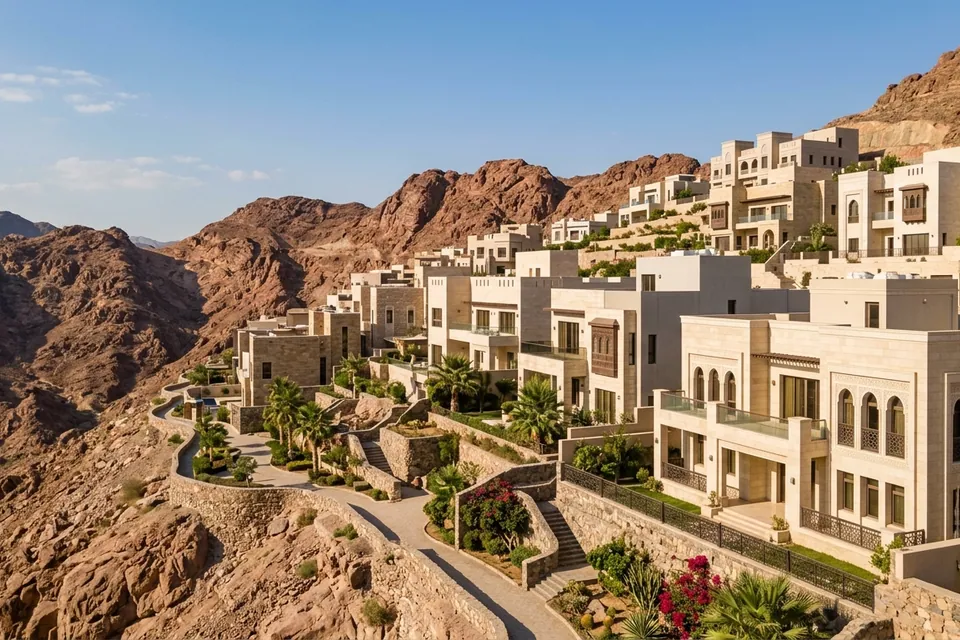
Red Sea Coastal Environment — Jeddah
Water Leak Detection & Waterproofing in Jeddah
Jeddah’s coastal environment presents high relative humidity, saline soil conditions, and elevated groundwater tables in several districts. These conditions place continuous stress on underground concrete water tanks, ground-floor walls, buried pipe joints, and flat villa roofs exposed to both coastal dampness and seasonal rain.
Underground water tank inspection and internal waterproofing against coastal groundwater and salinity
Non-destructive under-tile, bathroom, and swimming pool leak detection
Waterproof and thermal roof insulation (including polyurethane foam) for villas and residential buildings
High water bill diagnostics covering water meters, float valves, and buried supply lines
Makkah’s residential villas and multi-story buildings experience intense summer heat, rocky terrain foundations, and high water-consumption cycles. Effective thermal and waterproof roof insulation is essential to reduce heat transfer into upper floors, alongside systematic inspection and waterproofing of underground and elevated water tanks.
Thermal and waterproof roof insulation engineered for extreme summer temperatures
Underground and rooftop water tank crack remediation and internal waterproofing
Bathroom, kitchen, and concealed pipeline leak detection across villas and apartment buildings
Wall dampness assessment and high water consumption diagnostics
Swimming Pool Leak Detection & Waterproofing in Jeddah and Makkah
Residential swimming pools operate under constant hydrostatic pressure, thermal cycles, and water treatment chemicals—making any defect in waterproofing or plumbing a source of water loss and deck settlement.
Differentiating Natural Evaporation from a Potential Pool Leak
In the warm climate of Jeddah and Makkah, outdoor pools naturally lose water daily to evaporation (accelerated by wind, sun exposure, and water features). However, if the water level drops faster than normal evaporation, if deck tiles around the pool show dampness or settlement, or if air bubbles continuously enter return lines, a structured technical inspection is needed to distinguish plumbing leaks from shell seepage.
Key Pool Inspection & Waterproofing Focus Areas:
1. Inspecting Fittings & Penetrations Before Demolition
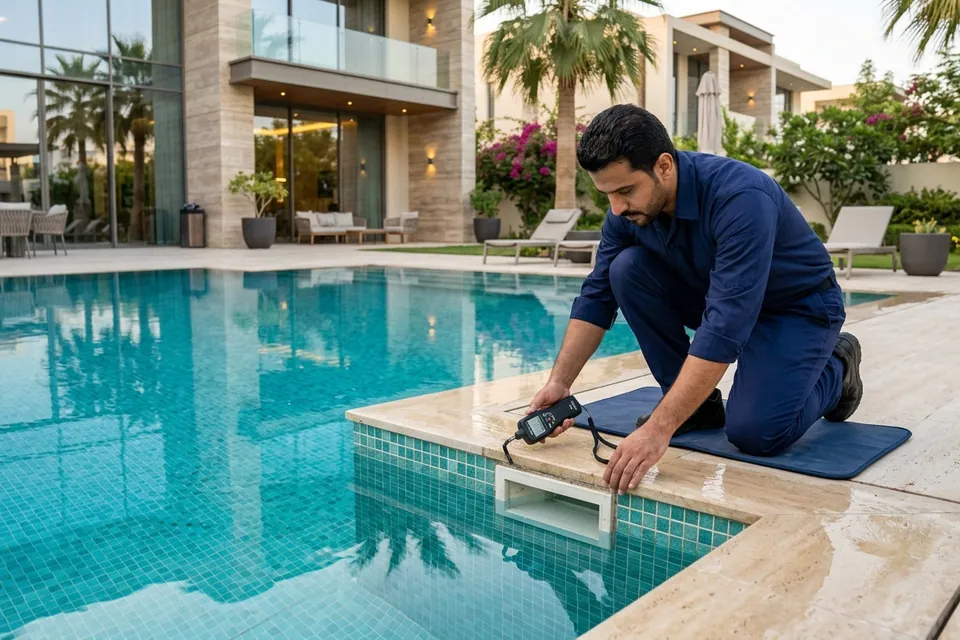
Checking the skimmer throat, return jets, vacuum ports, main drain, and underwater light niches—which account for a large share of pool leaks.
2. Evaluating Mosaic / Ceramic Tile Joints
Inspecting grout integrity and expansion joints across pool walls and floors, where chemical wear can allow water to migrate behind tiles.
3. Compatible Waterproofing Systems
When waterproofing a concrete pool shell prior to tiling or renovating an existing pool, flexible multi-layer cementitious waterproofing is paired with compatible water-resistant adhesives and grouts.
Service Scope Note: Bashaer Al Khair specializes in swimming pool leak inspection, waterproofing membranes, and joint remediation. We do not advertise new swimming pool civil construction or mechanical pump manufacturing unless confirmed within a specific inspection scope.
Inspecting skimmer throats, fittings, and mosaic joints before proposing re-waterproofingIllustrative
Critical Structural Envelope Protection
Roof & Water Tank Waterproofing: Preventing Moisture Damage and Water Loss
The roof slab and the underground water tank are the two most critical water-retaining and weather-exposed elements of any building in Saudi Arabia.
Successful roof insulation begins by evaluating the existing substrate: whether it is a new concrete slab, an existing tiled roof experiencing joint seepage, or an older roof with weathered membrane layers.
Substrate & Ponding Water Assessment:Checking surface slopes toward rainwater drains and addressing low spots where standing water accumulates.
Waterproofing & Thermal Insulation Integration:Implementing standalone waterproofing, thermal insulation boards to reduce summer heat gain, or combined seamless polyurethane foam systems.
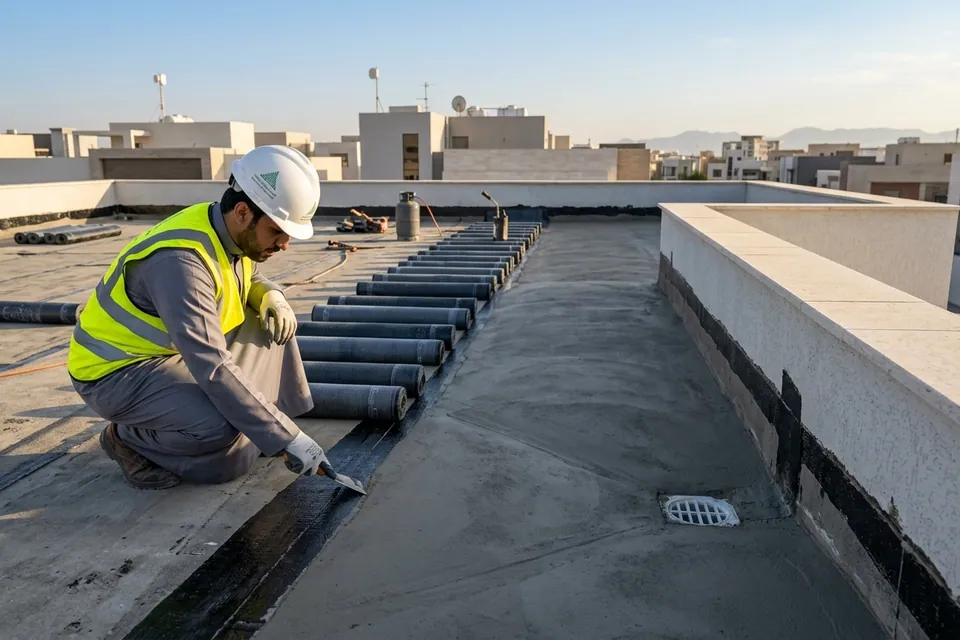
Old Insulation Restoration & Parapet Detailing:Cleaning and repairing surface cracks, detailing parapet wall coving joints, and applying a system compatible with the existing substrate.
Illustrative — Tank Insulation
Domestic Water Storage Protection
Underground & Overhead Water Tank Waterproofing
Underground concrete tanks face bidirectional water pressure (stored water pressure from inside and soil moisture/groundwater pressure from outside), while rooftop tanks endure intense solar exposure.
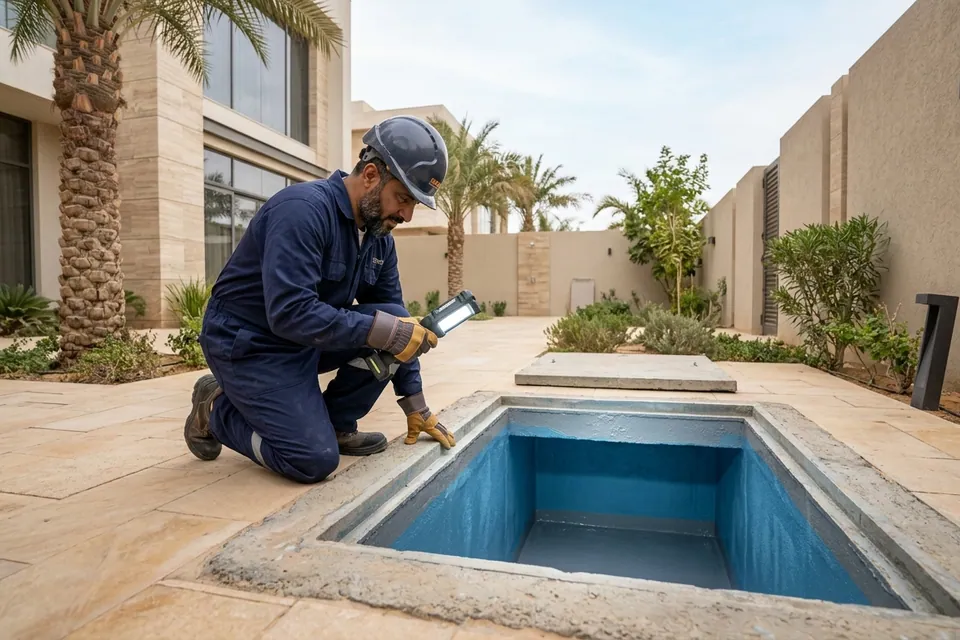
Cracks, Honeycombing & Tank Neck Inspection:Inspecting internal walls, floor slabs, ceiling slabs, and the tank neck where pipe sleeves and access covers meet the concrete.
Material Compatibility with Tank Usage:Selecting internal lining systems (flexible cementitious or tank-grade epoxy) appropriate for domestic water storage environments.
Proper Surface Preparation & Curing:Thoroughly cleaning the concrete substrate, repairing cracks, applying coats at proper thickness, and allowing full curing time before refilling.
Transparent Pricing Factors & Quote Preparation
How Are Leak Detection and Waterproofing Costs Determined?
In commitment to professional transparency, we do not publish arbitrary "starting from per-meter" prices before understanding your property’s condition. Actual cost depends on clear engineering variables evaluated during inspection.
1. Total Work Area (sqm)
The net surface area of the roof, internal dimensions of the water tank or pool, or number of bathrooms/inspection zones.
2. Substrate Type & Structural Condition
Whether the surface is smooth new concrete, existing tile, or concrete with honeycombing and cracks requiring preparatory repair.
3. Condition of Previous Insulation
Whether damaged old membrane layers must be mechanically removed and the slab leveled prior to applying the new system.
4. Nature of the Issue & Service Scope
Whether the requirement is a targeted pipeline leak check, a comprehensive property diagnostic, or full multi-layer waterproofing.
5. Selected Material System & Coat Count
Material requirements differ between cementitious coatings, bituminous membranes, polyurethane foam, and epoxy tank linings.
6. Site Accessibility & Preparation Needs
Building height, density of rooftop HVAC units/piping, and requirements for draining and drying tanks or pools prior to work.
Interactive Quote Request Builder
Prepare Your Technical Quotation or Inspection Request
Select your city, service, and approximate property parameters below to assemble a structured technical request—without misleading automated price guesses.
Preferred Contact Method
Your Structured Technical Request Summary:
Technical Quote & Inspection Request — Bashaer Al Khair
• City: Jeddah
• Requested Service: Roof Waterproofing
• Current Surface Condition: New concrete slab / tank
• Approx. Area: To be measured on site
• Preferred Contact: Submit request online for team follow-up
Why We Commit to Engineering Clarity Over Exaggerated Claims
In the waterproofing and leak detection market, unrealistic promotional claims—such as "100% zero breaking guaranteed in every case" or unverified project counts—are common. At Bashaer Al Khair, we earn trust through technical accuracy.
01
Diagnosis Before Recommendation
We do not propose full roof recoating or bathroom demolition before verifying the actual source of moisture and checking whether the fault lies in supply pipes, drains, or waterproofing.
02
Honesty About Equipment & Material Limits
We clearly explain how non-destructive inspection tools minimize blind breaking, and when localized opening is physically necessary to access and repair a damaged pipe.
03
Accurate Labeling of Visuals & Content
All photographs displayed in this phase are high-definition illustrative visuals demonstrating inspection methods and insulation layers; we never misrepresent illustrative images as past client projects.
04
Clear Scope Definition Prior to Work
Work stages, recommended material systems, substrate preparation requirements, and any applicable follow-up terms are clearly explained before execution begins.
Consumer Guidance on High Water Bills
High Water Bills & Internal Leaks: Accurate Guidance Based on National Water Company (NWC) Resources
Public awareness data from the National Water Company (NWC) indicates that hidden internal leaks within a property account for the vast majority of sudden spikes in residential water consumption.
•Faulty underground or rooftop tank float valves allowing continuous silent overflow waste.
•Cracks in the underground water tank neck or concrete walls and deteriorated internal tank waterproofing.
•Leaking toilet cisterns (flapper/flush valves) that silently waste substantial water volumes 24 hours a day.
•Concealed ruptures in the buried supply line connecting the water meter to the underground tank or beneath courtyard tiles.
2. How to Perform a Preliminary Meter & Tank Check
•Meter Isolation Check: Close all internal faucets and fixtures across the property, then observe the water meter indicator; continued movement points to an internal leak.
•Tank Supply Line Check: Shut off the underground tank float valve and observe the meter; if the meter stops, the loss is inside or after the tank; if it keeps moving, the line between the meter and tank may be leaking.
•Toilet Cistern Check: Place a few drops of food coloring inside the cistern tank without flushing; color appearing in the bowl indicates a leaking flush seal.
3. Distinction Between Technical Inspection & Official NWC Procedures
•Our technical inspection at Bashaer Al Khair helps property owners locate and resolve the physical cause of water loss to protect their building and stop ongoing waste.
•Bill dispute applications, consumption reviews, or settlement requests are governed exclusively by the official regulations and terms of the National Water Company (NWC).
•Always refer directly to the official NWC portal (nwc.com.sa) or mobile app to verify current eligibility rules and official procedures.
Regulatory Disclosure: Bashaer Al Khair is an independent technical service provider for water leak detection and waterproofing. We do not claim accreditation by the National Water Company (NWC), nor do we guarantee bill reductions or issue official accredited reports unless formally authorized.
Verified Geotechnical & District Coverage Intelligence — 42 Core Districts
Engineering Coverage, Soil & Building Matrix in Jeddah
Coastal environment with high relative humidity (65%–85%), elevated saline groundwater table (coastal Sabkha) along the western corridor and Obhur, and alluvial/clay soils in eastern districts, amplifying negative hydrostatic pressure on underground tanks, basements, and reinforcement steel corrosion.
North Obhur District
Jeddah
Confirmed Coverage
Building Profile: Modern coastal villas and compounds featuring swimming pools and underground tanks near sea level
Soil & Environment: Very high, saline groundwater table (coastal Sabkha)
Common Local Issues:
Underground tank level drop or salinity spikes from negative pressure
Lower-wall rising damp and paint peeling on ground floors
Field Dispatch Note: Mobile diagnostic and waterproofing engineering crews operate daily across all verified Jeddah and Makkah districts listed above via scheduled appointments.
Frequently Asked Questions About Leak Detection & Waterproofing in Jeddah & Makkah
Accurate, practical answers to help you understand your property’s symptoms and the right next step.
How do I know if I have a hidden water leak in my property?+
Common indicators include an unexpected spike in your monthly water bill without increased usage, a water meter indicator that keeps moving when all taps are shut off, damp spots or peeling paint with white salt deposits along lower walls, a faint sound of running water in quiet hours, or a rapid drop in your underground tank level.
Can water leaks be detected without breaking walls or tiles?+
Non-destructive testing tools—such as acoustic listening detectors, moisture meters, thermal imaging cameras, and pipeline pressure tests—help localize the suspected leak zone and avoid blind demolition across entire rooms. However, once a buried pipe break is pinpointed, repairing the pipe itself will require a narrow, localized opening at that specific spot.
What are the main causes of high water bills in Jeddah and Makkah?+
According to National Water Company (NWC) consumer guidance, silent internal leaks are the primary cause—most notably defective underground or overhead tank float valves, cracks in the underground tank neck or walls, leaking toilet cistern flappers, and leaks in the buried pipe between the meter and the ground tank.
What is the difference between waterproofing and thermal insulation for roofs?+
Waterproofing prevents rainwater and moisture from penetrating the roof slab to protect structural concrete, reinforcement steel, and interior ceilings (using bituminous membranes, cementitious coatings, or liquid membranes). Thermal insulation slows down solar heat transfer into the building to reduce air-conditioning loads (using XPS boards or foam). Systems like spray polyurethane foam (SPF) with a UV protective topcoat combine both functions.
How is the cost of roof waterproofing or leak detection determined?+
Pricing depends on the total area (sqm) or tank dimensions, substrate type (tiled vs. bare concrete), condition of any existing insulation, required material system and number of coats, and whether crack repair or slope correction is needed. We provide an interactive quote and inspection request form to evaluate your actual site parameters rather than quoting inaccurate flat rates.
Is waterproofing suitable for already tiled roofs?+
Yes, specialized solutions exist for tiled roofs, but the proper method depends on site inspection: if the tiles are structurally sound and seepage is limited to grout joints, joint remediation and compatible surface systems can be applied. If tiles are hollow, settled, or water is trapped in the sand bed beneath them, addressing the underlying substrate is necessary first.
When does an underground water tank need waterproofing inspection?+
An underground tank should be inspected when you notice rapid water loss, an unexplained high water bill, changes in water clarity or odor caused by groundwater infiltration, dampness or tile settlement around the tank cover, prior to commissioning a new property, or after several years without maintenance.
What causes a swimming pool’s water level to drop continuously?+
Water loss may be due to natural evaporation in hot weather, or an active leak around the skimmer throat, underwater light conduits, return and suction lines, main drain, deteriorated mosaic tile grout, or structural cracks in the pool shell. A methodical inspection identifies the source before deciding on joint repair or full waterproofing.
Do you provide services in both Jeddah and Makkah?+
Yes, Bashaer Al Khair serves both Jeddah and Makkah across villas, apartments, residential buildings, and commercial properties for water leak detection, moisture diagnostics, and waterproofing and thermal insulation.
How can I request a technical inspection?+
You can use the interactive "Find Your Service" problem selector on our homepage, submit your details through the online Inspection & Quote Request Form by selecting your city, property type, and observed symptom, or reach out via our configured contact channels.
Online Inspection & Service Request
Submit Your Issue Details to Coordinate an Inspection or Quote
Complete the fields below accurately. Your submission is validated and assigned a unique reference ID, with a ready-to-share technical summary.
Start with a Methodical Assessment
Facing a Water Leak or Need Proper Waterproofing for Your Property?
Start by clarifying the issue and its location, and reach out to Bashaer Al Khair to inquire about the appropriate service and inspection steps in Jeddah and Makkah.

 Illustrative — Jeddah