
How to Prepare a Roof for Waterproofing: What Gets Checked and Fixed First
Why good materials still fail on a poor substrate
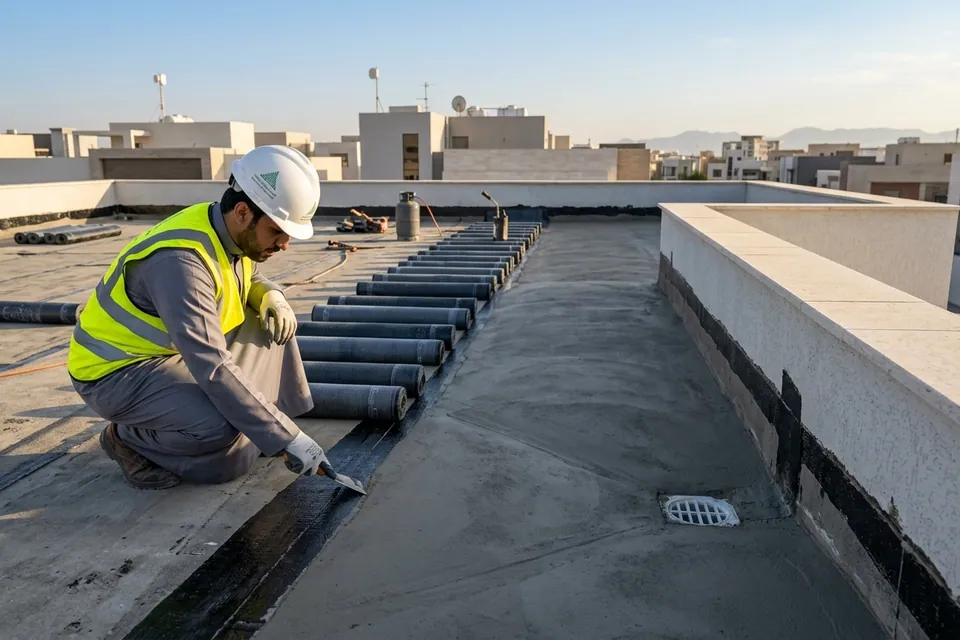
Most owners compare products first: spray foam, torch-on rolls, liquid membranes. The more useful question is what the product will be bonded to. Any roof waterproofing system relies on three things: adhesion to the surface, a continuous layer without weak seams, and a roof that sheds water towards the drains. Preparation affects the first and third directly and the second indirectly.
If a membrane goes down over dust or a flaking old coating, it bonds to the dust, not to the concrete. Roof slabs in a hot climate expand during the day and contract overnight, so a weak intermediate layer moves and takes the new waterproofing with it. And if the slab is still holding moisture, trapped water vapour pushes up under the layer and creates blisters. That is why we look at the roof from the bottom up: what is the concrete like, what is on it now, and where does the water go?
If you are still choosing between systems, read our comparison of spray foam versus bituminous membrane, but let the survey of your roof guide the final pick.
Survey the roof before asking for quotes
You can do a simple visual check before any contractor visits. It helps you know what to ask and lets you compare quotes on the same basis. Walk the roof on a dry day with your phone and look at the following.
| What you see | What it may mean | What is usually required first |
|---|---|---|
| Old layer bulging or lifting off the slab | Poor bond or trapped moisture underneath | Cut out the lifted area and inspect the concrete below |
| Fine hairline cracks spread across the surface | Shrinkage in the concrete skin | Clean and fill with a flexible material the system maker approves |
| A wide crack that opens and closes with the seasons | Structural movement or an unformed joint | Find the cause first, then use a product that tolerates movement |
| Dark, green or white salty patches | Repeated wetting and salt deposits | Remove salts, dry the surface and find the water source |
| Fine dust coming off when you rub the surface | A weak, powdery top layer | Grind or scrape back to sound concrete |
| Old paint, oil or a glossy finish | Contaminants that block adhesion | Remove or roughen as the product guidance requires |
| Water standing after rain or washing | Inadequate falls or a high outlet | Fix the falls before waterproofing, not on top of it |
| Cracked sealant around pipes and parapets | A weak point where surfaces meet | Rework the detail and carry the layer up the wall |
This table is a first guide only and does not replace an on-site inspection. A single crack can look alarming and be superficial, or look harmless and be important. The point is that each row turns into a separate item of work, and it should show up as a separate line in any quote.
The preparation sequence we would expect from any serious contractor
- Photograph the existing condition: falls, drains, edges, cracks, and whatever sits on the roof such as tanks and AC units.
- Remove anything failed or loose: bulging old membrane, crumbling screed, loose tiles, leftover adhesive.
- Clean thoroughly by scraping, brushing and vacuuming until no fine dust, oil or crystallised salt remains.
- Repair cracks and voids and level holes or rough patches with a repair material compatible with the waterproofing system.
- Confirm the slab is dry enough for the chosen product, and postpone the work if it is not.
- Check the falls and outlets and correct them before waterproofing, not afterwards.
- Apply the primer or bonding coat if the system calls for one, following the manufacturer data sheet.
- Photograph the prepared roof before the waterproofing goes on, so nothing is buried unrecorded.
Cleaning is more than sweeping
A broom removes the coarse debris. Fine dust, salts and oils need brushing, compressed air or a vacuum. A quick hand test: rub the surface with your palm, and if a white or grey powder comes off, it is not ready. If the roof has an old coating or a glossy surface, ask the manufacturer how that surface should be prepared, because some systems need the surface roughened and others need the coating removed entirely.
Cracks: hairline versus moving
Hairline surface cracks can usually be filled with a flexible repair material and then covered by the waterproofing system. A crack that widens and narrows between summer and winter, or runs along a wall line, needs its cause understood before anything is applied. It may be an ordinary movement joint, or it may point to settlement or overloading, in which case a structural engineer should look at it. No coating should be promised as a permanent fix for an actively moving crack.
Moisture inside the slab
If waterproofing is applied over a damp slab, the water can turn to vapour in the afternoon sun and push upward, lifting the layer into blisters. There is no precise household moisture test, but a rough indicator is to tape a clear plastic sheet fully around its edges to the surface, leave it for a day, and see whether condensation or a darker patch forms beneath it. Treat that as a hint only. For sensitive jobs a technician may use a moisture meter, and the final rule is whatever the chosen product requires.
Primers: always needed?
Some systems go down on a clean surface directly; others require a primer to improve adhesion and bind residual dust. There is no universal answer, so the manufacturer data sheet is the authority. Ask the contractor to name the primer, explain why it was chosen, and avoid vague promises such as “we will put a primer on”.
Falls and drains come before the membrane
Excellent waterproofing laid over wrong falls will hold water every time it rains and keep the layer under constant load. The slope toward each outlet is checked and corrected with a suitable screed before waterproofing starts. Drains, pipe penetrations and parapet junctions need extra care; see our pages on roof leak details at parapets, drains and pipes and ponding water, slope and drainage.
Checklist before the contractor starts
- Dated photos of every corner, edge and drain.
- A written agreement on what will be removed and what will stay.
- The repair method and material for cracks.
- A clear plan for moisture: how it is judged and what happens if it is high.
- The named primer, if any, taken from the product data sheet.
- Falls reviewed, with outlet positions and whether they will be raised or replaced.
- Cleaning of the roof and removal of demolition waste included.
- A start date tied to the weather, not only the contractor’s schedule.
Scenarios by building type
Villa with a large roof
A big roof means more area to survey and more details: water tanks, drainage outlets, ventilation openings and several parapets. Villas that were waterproofed before often carry layers of old material, and the key question is whether it is all removed or whether the sound parts are kept. That answer comes from testing several points, not from guessing. Most problems later appear at tall walls and add-on structures rather than in the open field of the roof.
Top-floor apartment under a shared roof
The roof is usually jointly owned, so work needs agreement with the other owners or the building association. Technically, the first question is whether the leak really comes from the roof or from plumbing. If you are not sure, start with working out whether a ceiling stain is a roof leak or a pipe leak before paying for waterproofing you may not need.
Multi-storey building with a roof that is used
If the roof is used for storage, laundry or regular technician access, preparation should include planning a protective layer that tolerates foot traffic, and protecting heavy equipment during the works. Moving equipment may require coordination with the maintenance companies that look after it.
A roof that already has old waterproofing
Old waterproofing is not automatically a failure, and not automatically fit to keep. The old layer is checked at several locations: is it bonded, is there moisture under it, and can the roof carry extra weight? We cover that decision in repair or redo old roof waterproofing.
Common preparation mistakes
- Waterproofing over a damp roof after rain or washing because the schedule is tight.
- Sweeping only, leaving a fine dust layer that stops adhesion.
- Painting over cracks instead of treating them, so they reappear.
- Leaving the falls as they are and adding waterproofing over them, so puddles remain.
- Ignoring wall junctions and pipe penetrations, which are the most common leak points after installation.
- Not recording the condition in photos, so responsibility for hidden defects is unclear later.
- Using a primer with no data sheet, or one that is not compatible with the system.
- Rushing before the rains instead of booking a sensible window. More in common roof waterproofing mistakes to avoid.
What affects the cost, and how to ask for a quote
We do not publish prices here because every roof is different, but these are the items that change the calculation. A sound quote lists them as separate lines.
- Roof area and how easy it is to reach and hoist materials.
- Thickness and condition of existing layers and how much must be removed.
- Number and width of cracks and the repair method needed.
- Correcting falls or altering drains.
- Equipment and tanks that need moving or protecting.
- The waterproofing system chosen and its preparation requirements.
- Cleaning and disposal of waste.
When requesting a quote, send photos, the approximate area and a description of the problem, and ask for preparation to be written as separate items. To compare offers, use our roof waterproofing quote comparison checklist. We serve Jeddah and Makkah, and visits are arranged at a time that suits you.
Questions to put to the contractor before you agree
- What will you remove and what will stay of the current layers, and why?
- How will you confirm the slab is dry enough for this product?
- How will you treat a moving crack if one appears during the work?
- Will you correct the falls, and how will you show water now reaches the drains?
- Which primer is specified and why was it chosen?
- Will the roof be photographed after preparation and before waterproofing?
- What happens if an unexpected problem appears under the old layer?
Frequently asked questions
Do I always have to remove the old waterproofing?
No. If the old layer is bonded, sound and dry underneath, it may be kept, depending on the manufacturer’s guidance. If it is bulging, cracked or wet beneath, removal is safer. The decision comes from checking several points on the roof.
How can I tell if the roof is dry enough?
There is no accurate household method. A taped clear plastic sheet left for a day gives a rough hint through condensation, and a technician may use a moisture meter. The dryness requirement itself comes from the product instructions.
Is painting a waterproof coating over cracks enough?
Fine surface cracks can be treated and then covered by the right system, but moving cracks need their cause understood first. A coating alone does not stop concrete from moving.
Is a primer needed with every waterproofing type?
It depends on the product. Some systems require one and some do not. The data sheet is the reference, and the contractor should name the primer and explain the choice.
Can waterproofing be done straight after rain?
The roof needs time to dry, and how long depends on conditions and the product. Rushing onto a wet roof risks trapped moisture, blisters and loss of adhesion.
Who corrects the falls: the waterproofing contractor or the main contractor?
Agree it in writing before the start. If the correction involves concrete or screed work, be clear who is responsible and when it will be finished, since waterproofing cannot begin before then.
Can I prepare the roof myself to save money?
Clearing the roof of items and taking photos is useful. Scraping, grinding and working near edges carry safety risks, and judging moisture and cracks takes experience, so leave those steps to professionals.
Do you cover both Jeddah and Makkah?
Yes, we serve Jeddah and Makkah. Contact us to arrange a visit.
Related pages you may find useful
- Roof and building waterproofing guide for Jeddah and Makkah
- Pre-rain-season roof checklist
- Spray foam versus bituminous membrane
- Ponding water, slope and drainage
- Parapet, drain and pipe details
- Old roof waterproofing: repair or redo
- How to compare roof waterproofing quotes
- Waterproofing versus thermal insulation
- Roof waterproofing in Jeddah
- Roof waterproofing in Makkah
- Leak detection before waterproofing
- Arabic version of this page
- Bashaer Al Khair home page